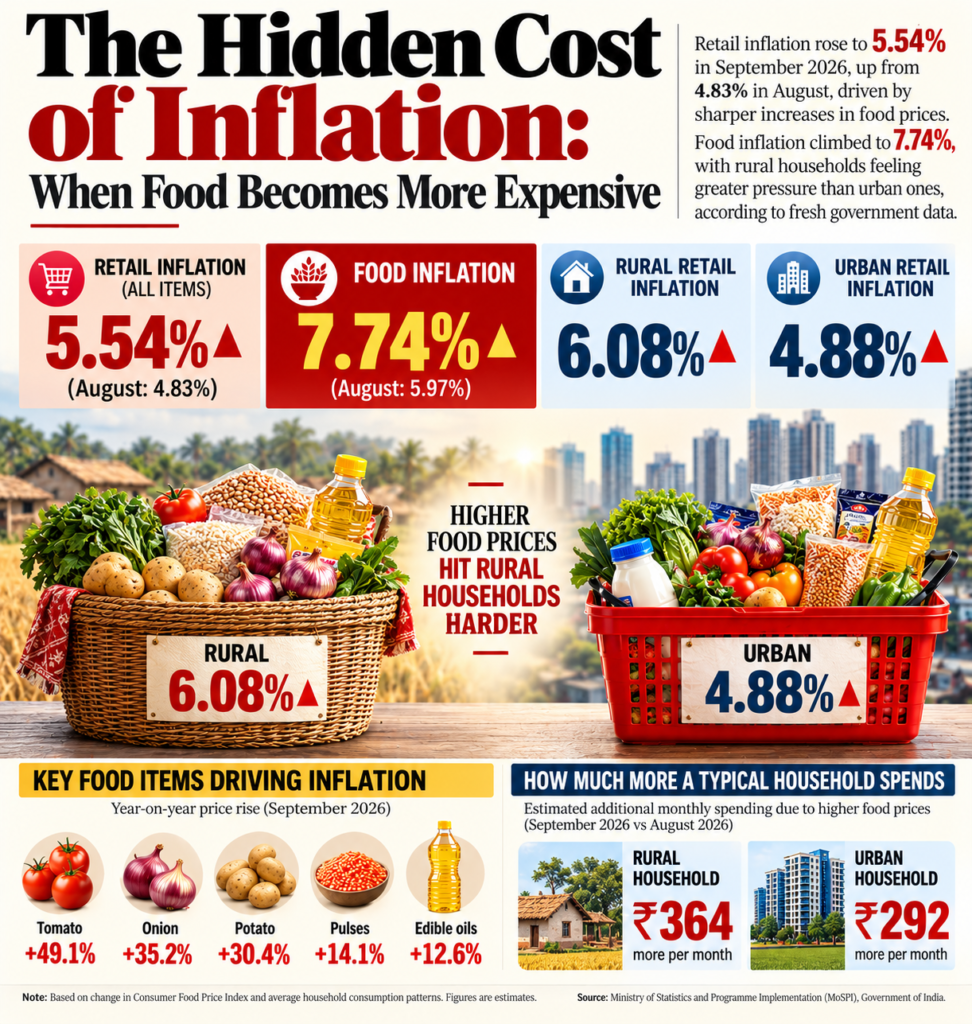
Inflation is often reduced to a single number in official announcements. But the headline figure does not always capture the pressure building inside household budgets. In September 2026, India’s retail inflation rose to 5.54 per cent, up from 4.83 per cent in August. The sharper warning came from food prices, with food inflation climbing to 7.74 per cent from 5.97 per cent in the previous month. For households already juggling expenditure on groceries, cooking oil, pulses and vegetables, the increase could mean difficult choices about what to buy, how much to spend and what to leave out.
The burden is also unevenly distributed. Rural retail inflation stood at 6.08 per cent, compared with 4.88 per cent in urban areas, pointing to a greater inflationary squeeze in the countryside. But the headline rates alone do not reveal which essential food items are driving the increase or how much more families are actually paying. That requires a closer examination of item-wise price movements and household consumption patterns.
This infographic unpacks the numbers behind the headline, comparing rural and urban inflation and examining the potential impact on everyday food spending. The critical question is not simply whether prices are rising, but which essentials are becoming less affordable, for whom, and by how much.