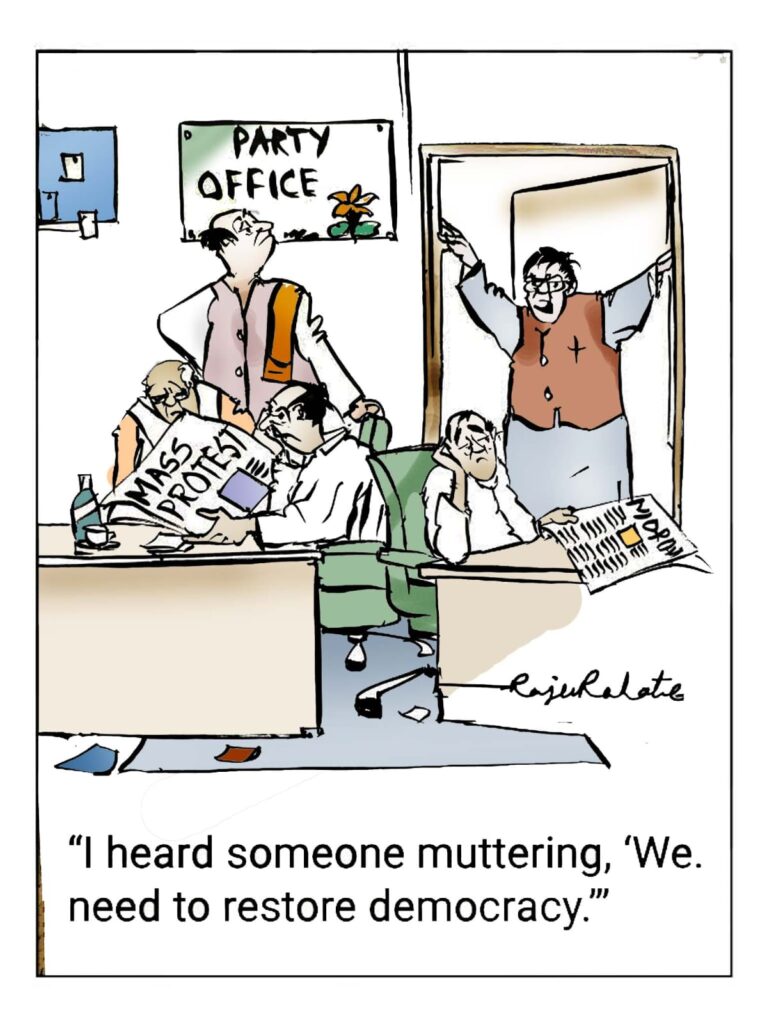
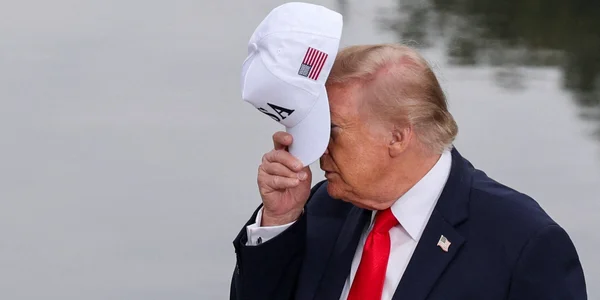
The verdict from American voters is in, and it could hardly have been more damaging for Donald Trump. In a stunning reversal of the political fortunes that brought him back to the White House in 2024, the Republicans have lost control of both chambers of Congress, handing Democrats a sweeping victory in the November 3 midterm elections.
The outcome is more than an electoral setback for a sitting president. It is a warning that Trump’s political dominance has limits, and that even a leader who has built his political identity around defying convention cannot indefinitely insulate himself from the consequences of economic discontent, foreign policy miscalculations and growing concerns about the concentration of executive power.
Democrats have made significant inroads into traditionally Republican territory, flipping at least seven Senate seats and more than two dozen House districts, according to the Associated Press. The victories included states that Trump carried comfortably in the 2024 presidential election. Kansas, Iowa, Texas, Ohio, Maine, North Carolina and South Carolina were among the states where Democrats secured Senate gains.
The scale of the reversal is particularly striking because Republicans entered the election with narrow but crucial majorities: 218-214 in the House and 53-47 in the Senate. They had expected to use those numbers to advance Trump’s legislative programme. Instead, they now face a Congress that could become the principal institutional obstacle to his presidency.
Economy Delivers the Biggest Blow
The most immediate explanation for the Republican rout lies in the everyday economics of American households.
Trump returned to office promising to bring down prices, revive domestic industry and restore economic security. But the electorate appears increasingly unconvinced that his administration has delivered on those promises. Inflation and the cost of living have remained central concerns, with voters particularly troubled by the price of groceries, fuel, utilities and other essentials.
The exit polls conducted by SSRS for a consortium of US media organisations, including the Associated Press and major television networks, provide a revealing picture of the public mood. Nearly nine in 10 voters identified the cost of living as a crucial or major factor in their electoral decision. Two-thirds blamed Trump for high prices, while roughly three-quarters expressed anger or dissatisfaction with the direction of the country.
The Associated Press’s voter survey also found that many Americans felt worse off than when Trump took office in 2025. The political significance is considerable: the economy, which helped Trump build his winning coalition in 2024, has become a source of vulnerability.
This is the familiar danger confronting incumbent governments in midterm elections. Voters may support a president’s broader political vision, but their patience diminishes when promises of economic relief fail to translate into improvements in household finances.
Trump’s tariffs, which were promoted as instruments to protect American industry and employment, have also become part of the economic debate. Critics argue that the additional costs imposed on imported goods have ultimately been borne, at least in part, by American businesses and consumers.
The result suggests that voters were not prepared to give the administration an indefinite grace period.
Iran War and the Limits of Trump’s Foreign Policy
The conflict with Iran has added another dimension to the administration’s political difficulties.
Trump’s return to the White House was accompanied by promises to end America’s involvement in costly overseas conflicts and put domestic priorities first. The war has complicated that message, raising questions about the human, economic and strategic costs of military intervention.
According to the Reuters analysis of the SSRS exit polls, voters were substantially more concerned about the cost of living than the war itself. But the conflict has nevertheless contributed to dissatisfaction with the administration. Most voters questioned in the CBS News exit poll believed the United States had made the wrong decision in taking military action against Iran, including approximately a quarter of Republican voters.
The distinction matters. Foreign policy does not necessarily determine the outcome of a midterm election, but an unpopular military engagement can reinforce an existing perception that a government is pursuing priorities disconnected from the concerns of ordinary citizens.
For Trump, the political difficulty is compounded by the fact that the war has challenged one of his most important campaign promises: that his presidency would put America first and avoid unnecessary foreign entanglements.
A Referendum on Presidential Power
The election has also exposed a deeper institutional anxiety. Trump’s second presidency has been marked by an assertive use of executive authority, confrontations with political opponents and an increasingly personalised style of governance. Supporters see this as decisive leadership. Critics view it as an attempt to weaken institutional restraints.
The exit polls suggest that concerns about presidential power have moved beyond the traditional Democratic constituency. Roughly seven in 10 voters wanted Congress to impose stronger checks and balances on the president, according to Reuters’ reporting on the election survey. The AP Voter Poll similarly found that about seven in 10 believed Congress was not doing enough to provide oversight.
The findings are significant because they suggest that the Democratic victory was not driven exclusively by partisan opposition to Trump. A substantial section of the electorate appears to want Congress to reassert its constitutional role.
The CBS News exit poll placed Trump’s approval rating at approximately 38 per cent, a particularly damaging figure for a president whose party was seeking to retain control of Congress.
The results could now give Democrats the opportunity to investigate the administration, scrutinise executive decisions, block legislation and reject presidential appointments. Congressional committees could become powerful platforms for examining the administration’s policies and conduct.
Trump, however, has refused to interpret the result as a personal rejection. Speaking to Fox News, he said: “I don’t view it as a hit on me.” He praised the Democratic campaign while blaming Republican candidates for their defeats.
That response may help him maintain control of his political base, but it does little to diminish the institutional consequences of losing Congress.
Republican Coalition Begins to Fracture
Perhaps the most consequential aspect of the results is the damage to the coalition that powered Trump’s 2024 comeback.
Democrats made gains among younger voters and Hispanic voters, particularly along the Texas-Mexico border, where Republican advances in recent elections had suggested a lasting political realignment. The AP reported that Democratic candidates also benefited from voters in traditionally Republican districts shifting away from the president’s party.
The victories in Texas and Iowa are particularly important. James Talarico’s Senate win in Texas and Josh Turek’s victory in Iowa demonstrate that Democratic candidates can compete successfully in states that Trump carried decisively in 2024.
Talarico sought to frame his victory as something larger than a partisan triumph. “We are tired of being told to hate each other,” he told supporters in Austin. “We didn’t win this race by alienating our neighbours or shaming our neighbours.”
His message points to an opportunity for Democrats: rebuilding a coalition around economic concerns and political inclusion rather than relying exclusively on opposition to Trump.
The results have also produced historic breakthroughs. Abdul El-Sayed’s victory in Michigan will make him the first Muslim senator in US history. Peggy Flanagan will become the first Native American woman to serve in the Senate. Meanwhile, Democratic leader Hakeem Jeffries is poised to become the first Black Speaker of the House, subject to the formal vote when the new Congress convenes.
These victories give the Democratic Party a broader political and symbolic platform.
A New Congress, A Different Trump Presidency
The immediate consequences will be felt in Washington. With Democrats controlling both chambers, Trump’s ability to push through legislation will be sharply constrained. Congressional investigations, confirmation battles and budget negotiations could become recurring flashpoints.
But the Democratic victory should not be mistaken for an overwhelming national endorsement of the party’s entire political programme. The AP Voter Poll found that the Democrats themselves remain unpopular with significant sections of the electorate. Their advantage on important issues, including the economy, was relatively narrow.
That presents a challenge for the party’s leadership. Winning an election by mobilising opposition to an incumbent is one thing; demonstrating that it can govern effectively is quite another.
Democrats must now translate electoral momentum into a coherent programme on affordability, employment, healthcare, immigration and institutional accountability. If they become preoccupied with investigations and partisan confrontation, they risk squandering the opportunity voters have handed them.
For Trump, the consequences are more immediate. He still controls the executive branch and retains substantial influence over the Republican Party. But the loss of Congress will weaken his legislative leverage and expose his administration to sustained scrutiny.
The next two years could therefore become a prolonged contest between a president accustomed to exercising power with few congressional obstacles and an opposition newly empowered to challenge him.
The midterms have not ended Trump’s presidency, nor have they settled the ideological battle dividing America. They have, however, demonstrated that his political authority is neither unlimited nor immune to electoral punishment.
In 2024, voters gave Trump another chance to reshape America. Two years later, they have handed Congress to the opposition.
The message is unmistakable: a president may command the White House, but he cannot assume that the country will follow him without question.