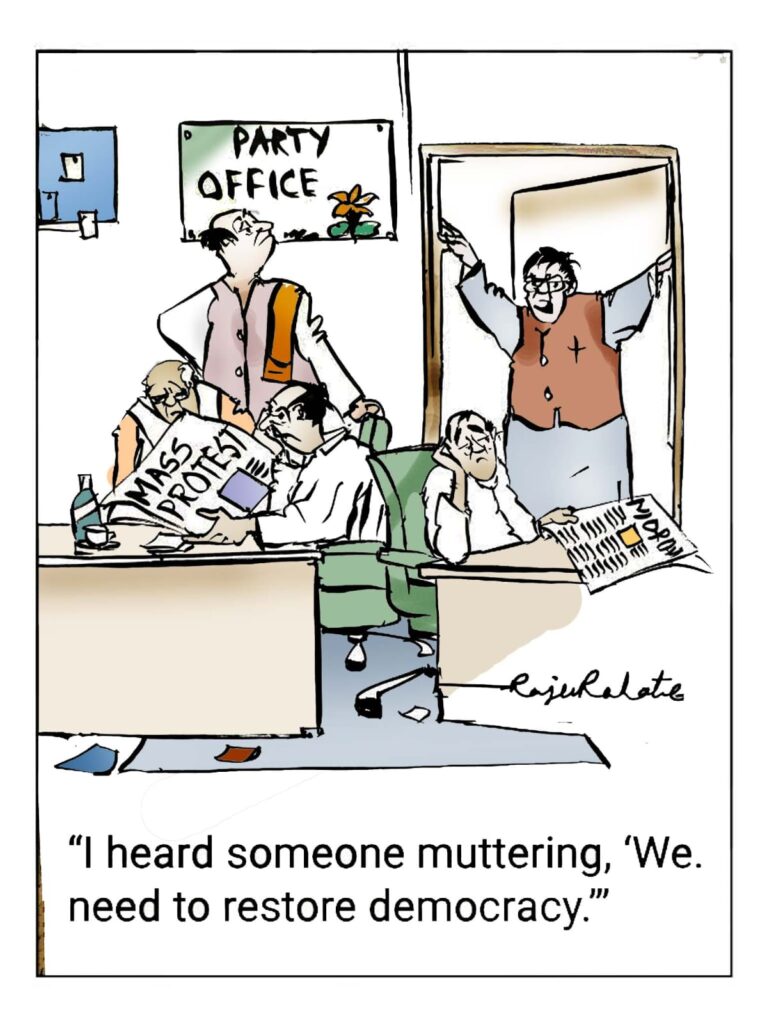
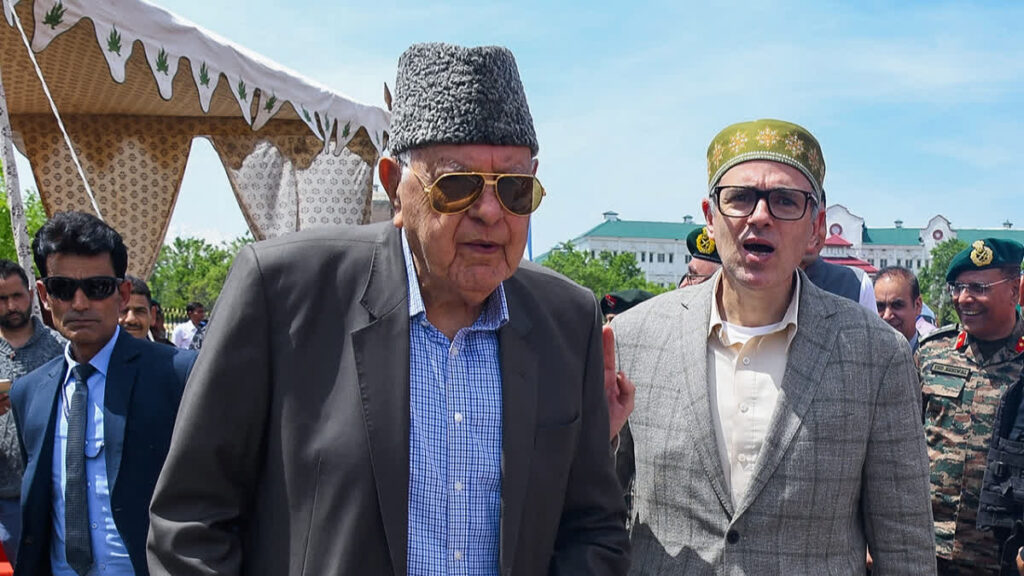
Jammu and Kashmir Chief Minister Omar Abdullah is facing an organised challenge from within his own party, with a group of National Conference (NC) legislators demanding a Cabinet overhaul, the removal of key political functionaries and greater accountability in government and party affairs.
The dissent surfaced following a closed-door meeting of legislators in Srinagar on Friday, October 30, held three days after Abdullah expanded his Council of Ministers by inducting four new members. What began as dissatisfaction among legislators who were overlooked in the reshuffle has reportedly developed into a collective effort to force changes in the functioning of the government and the party.
According to media reports, 19 NC legislators adopted a joint resolution seeking a Cabinet reshuffle and the removal of two individuals whom they accused of interfering in party affairs and administrative decision-making. Some reports, however, put the strength of the dissenting group at 24, saying 18 legislators attended the meeting and six others extended support through video conferencing.
The precise number of legislators backing the initiative remains unclear. Greater Kashmir reported that 17 NC MLAs and one Independent legislator attended the gathering. It also quoted Gurez MLA Nazir Ahmad Gurezi as describing the meeting as a routine gathering over a meal, although he acknowledged that party issues were discussed.
The meeting was held at the Srinagar residence of Qaiser Jamsheed Lone, the NC legislator from Lolab, and reportedly lasted several hours. The participants included senior legislators from both the Kashmir Valley and the Jammu region.
Cabinet Expansion Triggers Discontent
The immediate trigger was Abdullah’s first Cabinet expansion since his government assumed office in October 2024.
On October 27, Lieutenant Governor Manoj Sinha administered the oath of office to four NC legislators: Ali Mohammad Sagar, Shameema Firdous, Mir Saifullah and Altaf Ahmad Wani, popularly known as Kalloo. The expansion also involved dropping Independent MLA Satish Sharma from the Council of Ministers.
The Council of Ministers, which had been operating with six members, including the chief minister, was expanded to its permitted strength of nine. Under the Jammu and Kashmir Reorganisation Act, 2019, the Council of Ministers cannot exceed 10 per cent of the Assembly’s total strength. With 90 members in the Assembly, the maximum permissible strength is nine, including the chief minister.
The appointments, however, failed to satisfy a section of the party’s senior legislators, several of whom had expected to be considered for ministerial positions. The exclusion of experienced leaders, despite the availability of ministerial vacancies before the expansion, reportedly deepened resentment.
Mubarak Gul, a six-time legislator and former Speaker of the Assembly, was among those left out. His supporters staged protests in Srinagar, questioning the leadership’s decision. Gul had also been announced as the party’s general secretary shortly before the Cabinet expansion. He was subsequently removed from the organisational position after attending Friday’s meeting.
The discontent was not confined to legislators from the Valley. Representatives from Jammu also reportedly raised objections to the distribution of political and administrative responsibilities.
Removal of Adviser and Ministers Sought
The reported demands go beyond accommodating legislators who missed out on ministerial positions. The dissenting group wants the removal of Chief Minister’s Adviser Nasir Aslam Wani and Deputy Chief Minister Surinder Choudhary, besides seeking changes involving some ministers. Deccan Chronicle separately reported demands for the removal of Minister Javed Rana and NC treasurer Shami Oberoi.
Reports said that the legislators had specifically sought the removal of Nasir Aslam Wani and Shami Oberoi, accusing them of interfering in party affairs and administrative decisions.
The precise list of individuals targeted by the group therefore differs across reports. The common thread, however, is the demand to reduce the influence of individuals whom the legislators believe exercise disproportionate authority over the party and the government.
The group has also reportedly sought the replacement of ministers who have completed two years in office, arguing that ministerial positions should be redistributed based on merit, seniority and regional representation.
‘Coterie Culture’ and Internal Democracy
A more significant aspect of the dispute concerns the manner in which decisions are taken within the National Conference.
According to reports, the legislators have objected to what they describe as a concentration of decision-making powers in a small circle around the chief minister. They have questioned why elected representatives were not adequately consulted before the Cabinet expansion and have demanded a greater role for MLAs in government and party affairs.
NDTV quoted a legislator as saying that the group wanted to fight for internal democracy and ensure that the party and government were not treated as the fiefdom of a few individuals. The legislators reportedly want a clearer roadmap for implementing the NC’s election manifesto and greater accountability in governance.
The regional dimension has also emerged as a source of friction. Greater Kashmir reported that legislators from Jammu had complained about the allocation of funds under the Public Works (Roads and Buildings) Department, alleging that development expenditure had disproportionately benefited the constituency represented by Deputy Chief Minister Surinder Choudhary.
The legislators reportedly claimed that they had raised the issue with the chief minister but had not seen corrective action. These allegations have not been independently verified, and the deputy chief minister’s response was not available in the reports reviewed.
A Challenge to the Leadership
The National Conference has 41 MLAs in the 90-member Assembly. It formed the government with the support of Congress, which has six legislators, along with smaller parties and Independents.
The reported dissent is politically significant, given that the group represents a substantial section of the NC’s legislative strength. However, there is an important distinction between an internal challenge to the party leadership and a move to bring down the government.
There is no confirmed indication that the dissenting legislators have withdrawn support from the government, resigned from the party or formally demanded Omar Abdullah’s replacement as Chief Minister. Their reported demands centre on ministerial changes, the removal of certain functionaries and a restructuring of decision-making within the organisation.
The episode also comes amid a separate disagreement involving Srinagar MP Aga Syed Ruhullah Mehdi, who has announced his intention to resign from the party and the Lok Sabha on November 3. His differences with the Abdullah leadership have been developing independently, and Greater Kashmir reported that Gurezi denied any connection between Ruhullah’s decision and Friday’s gathering.
For Omar Abdullah, the immediate issue is therefore not simply the distribution of Cabinet positions. The dissent raises questions about how the party intends to accommodate senior legislators, manage regional expectations and ensure that elected representatives have a meaningful role in government.
The Cabinet expansion was expected to address vacancies and bring more legislators into the administration. Instead, it has exposed competing claims over seniority, political influence and the exercise of authority within the ruling party.
Whether the legislators can translate their collective demands into organisational changes will depend on the response of Omar Abdullah and party President Farooq Abdullah. For now, the public disagreement has brought an internal fault line in the National Conference into the open.