Story so far
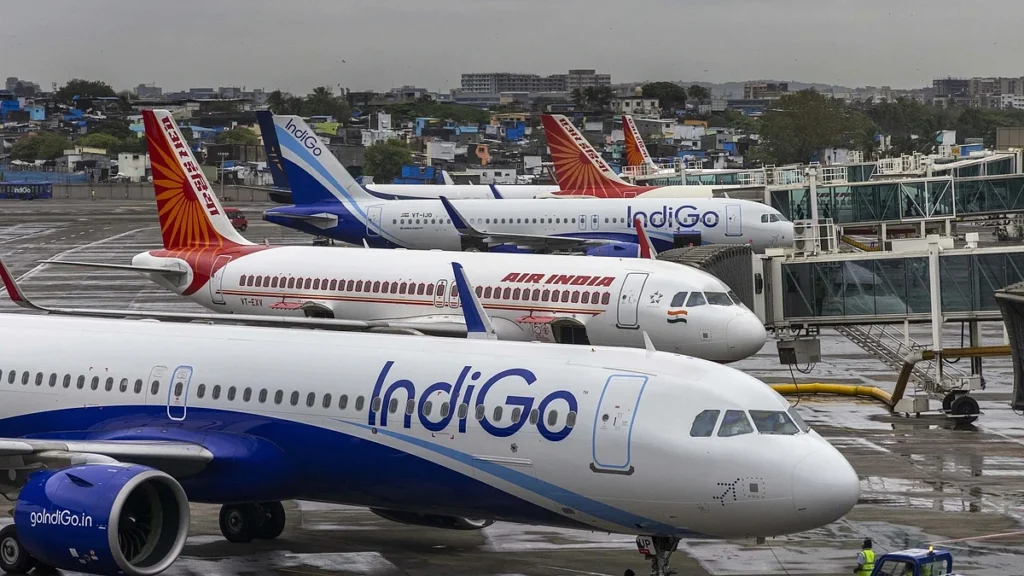
Festive travel has exposed a fault line in India’s airfare regime, with some fares reportedly reaching seven times their usual levels. The spikes have renewed scrutiny before the Supreme Court, which previously described them as “exploitation”. On November 2, the Court declined an urgent hearing on an application in a pending PIL alleging that fares on some routes had risen to between two and seven times their usual levels.
The Bharatiya Vayuyan Niyam, 2026, which will come into effect on January 1, 2027, gives the Directorate General of Civil Aviation (DGCA) responsibility for monitoring airfares, while reserving the power to intervene in an “extraordinary situation” for the Central Government. What does this mean for airlines and passengers?
1. Why can airfares rise so sharply despite regulation of the aviation sector?
India regulates aviation without routinely setting ticket prices. Rule 135(1) of the Aircraft Rules, 1937, allows airlines to determine their own tariffs, taking into account operating costs, the characteristics of the service, a reasonable profit and prevailing fares. In other words, the law provides a framework for pricing but does not prescribe a numerical ceiling on ticket prices.
The DGCA may intervene, but only on specific grounds. Under Rule 135(4), it may issue directions if it finds an “excessive or predatory tariff” or an “oligopolistic practice”. Its Tariff Monitoring Unit also checks whether airlines are charging fares within their declared tariff structures. An unusually high fare, by itself, does not make the pricing unlawful.
This regulatory gap has been debated previously. In 2023, the Parliamentary Standing Committee recommended “reasonable upper fare caps” to protect passengers from unusually high prices. However, no general fare ceiling was introduced. The new Rule 192 of the 2026 Rules now provides a separate mechanism for government intervention in exceptional circumstances, effective January 1, 2027.
2. Who will monitor airfares, and who can intervene?
The new framework separates the responsibility for monitoring fares from the power to intervene when exceptional circumstances arise.
Under Rule 192(2) of the 2026 Rules, airlines covered by the provision must submit their tariffs to the Director General. Rule 192(5) further provides that the DGCA shall monitor these tariffs.
The Central Government, however, retains the authority to intervene. Under Rule 192(6), it may issue written directions if it considers that an “extraordinary situation” has arisen and intervention is necessary in the public interest. Any such directions must be proportionate and remain in force only for the specified period.
This marks an important distinction from the existing framework. Under Rule 135(4) of the Aircraft Rules, 1937, the DGCA itself may issue directions in cases involving an excessive or predatory tariff or an oligopolistic practice. Under the new rule, the DGCA’s role is confined to monitoring tariffs, while the Central Government decides whether intervention is necessary and can issue the directions.
The legal basis for this division of authority is Section 10(2)(c) of the Bharatiya Vayuyan Adhiniyam, 2024, which permits rules to regulate airline tariffs and designate the officers or authorities empowered to exercise those powers.
Accordingly, from January 1, 2027, the DGCA will oversee airfare monitoring, but the power to intervene in an extraordinary situation will rest with the Central Government.
3. Can the Supreme Court step in when airlines charge exorbitant fares?
Yes, but there is a distinction between reviewing airfare regulation and fixing ticket prices itself.
The Supreme Court is considering this question in a public interest litigation (PIL) filed by social activist S. Laxminarayanan, who challenges what he describes as arbitrary and opaque airline pricing, particularly during festival periods. The petition seeks stronger regulatory safeguards and contends that inaction, despite existing statutory powers, is arbitrary and violates Articles 14 and 21.
The Court has expressed concern without prescribing ticket prices. In January 2026, referring to steep fares during the Kumbh and festival periods, the Bench described the situation as “exploitation”, with Justice Vikram Nath stating that the Court would “definitely interfere”. In May 2026, the Bench said there had to be “some rationalisation” and questioned the Centre about progress on the new airfare rules. These were oral observations, not a judgment imposing a price cap.
On November 2, Laxminarayanan filed a fresh application in the same pending PIL, seeking an urgent hearing and temporary caps on domestic fares during the festive period. He cited fares on some routes that had risen to between two and seven times their usual levels. He argued that waiting until the scheduled November 16 hearing would leave passengers without timely relief. A three-judge Bench headed by Justice Vikram Nath declined to list the matter urgently, without deciding the merits of the application.
The limits of the Court’s role are equally significant. In Mohammed Ali P.V. & Ors. v. Union of India & Ors. (2025), concerning higher Hajj fares from Calicut, the Court treated fare fixation under the tender process as a “commercial policy decision” and declined to substitute its own judgment, while asking the government to consider the petitioners’ representation.
The Supreme Court can examine whether the government and regulator have acted within the law. However, it has so far refrained from assuming the role of the authority responsible for determining airline ticket prices.
4. Can the government cap airfares under the new rules?
No. Rule 192 does not introduce a permanent ceiling on airfares or require airlines to obtain government approval before setting ticket prices. Rule 192(2) requires specified airlines to submit their tariffs to the Director General in the prescribed manner. This is a filing requirement for regulatory oversight, rather than a requirement to obtain prior clearance for each fare.
The Centre may intervene only under Rule 192(6). It must first form the opinion that an “extraordinary situation” has arisen and that directions are necessary in the public interest. Once it exercises this power, the rule imposes two express limits: any direction must be proportionate to the circumstances and may remain in force only for the specified period.
But what qualifies as an extraordinary situation? This is where the rule leaves room for interpretation. It does not define an “extraordinary situation”, prescribe a percentage increase that would trigger the power, or set a numerical fare above which intervention would automatically follow.
The Centre therefore determines, in the first instance, when that threshold has been crossed. The power is restricted in how it can be exercised, but the circumstances that can trigger it are not clearly defined. If a direction is challenged, the dispute is likely to turn on whether the circumstances justified intervention and whether the resulting measure was in the public interest, proportionate and time-limited.
5. Will passengers finally know what they are paying for?
Effective January 1, 2027, Rule 192 of the 2026 Rules will make it more difficult to obscure the full cost of a ticket. Under Rule 192(4), the booking website and the ticket issued must display the total amount payable, together with a separate breakdown of the fare, taxes, fees, cancellation charges, refund conditions and any other applicable charges. Rule 192(3) also requires airlines to publish their tariffs on their websites or other digital platforms in the form specified by the DGCA.
Some of these requirements are not new. Rule 135(2A) of the Aircraft Rules, 1937, already requires airlines to disclose the total amount payable and separately identify the fare, taxes, fees and other charges, while Rule 135(2B) requires those particulars to appear on the passenger ticket.
The 2026 Rules explicitly include cancellation charges and refund conditions in the disclosure requirements. Passengers should therefore be able to see not only the ticket price at the time of purchase, but also the potential cost of cancelling a booking and the terms governing refunds.