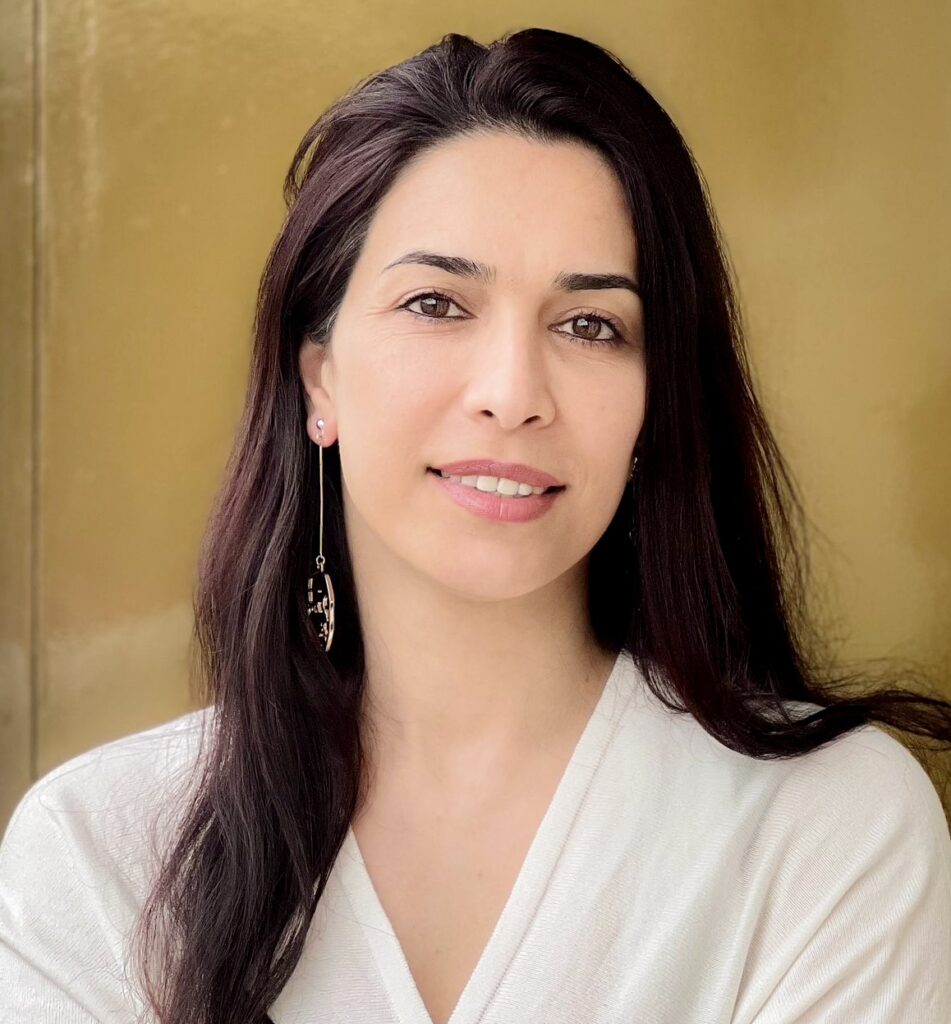
In exile, Afghan women continue to fight the Taliban’s war on their rights. Somaia Ramish, writer, human rights activist and former provincial councillor of Herat, is one of the most prominent voices in this resistance. From Amsterdam, speaking to Giorgia Pietropaoli, she exposes the regime’s campaign to erase women from public life, from banning education and employment to suffocating art, poetry and freedom of expression.
Somaia’s warning to the world is stark: normalising Taliban rule means accepting gender apartheid as a fait accompli, while an entire generation of Afghan women is denied its future. Excerpts:
Giorgia Pietropaoli: Why is it important for the international community to formally recognise gender apartheid in Afghanistan?
Somaia Ramish: What is happening in Afghanistan today is, in my view, a clear form of gender apartheid. Women are being systematically and structurally erased from society simply because they are women. Under Taliban rule, even a woman’s identity, her face, and her voice have effectively become grounds for criminalisation. Over the past five years, the Taliban have issued more than a hundred decrees and restrictions aimed at excluding women from public life and denying them their most fundamental rights. Taken together, these measures reflect a system of gender apartheid.
The international community must, first and foremost, formally recognise this reality without hesitation, ambiguity, or justification. Recognition is not merely a symbolic gesture; it is an essential step towards accountability. When gender apartheid is clearly identified and acknowledged, it becomes much harder for governments and international institutions to treat the systematic persecution of women as an internal matter or to normalise it through political expediency. But recognition alone is not enough. It must be followed by concrete and coordinated action to challenge the system responsible for these violations. This includes holding those responsible accountable, pursuing legal and diplomatic measures, supporting efforts to establish gender apartheid as an internationally recognised crime, and ensuring that the rights of Afghan women remain central to all international engagement with the Taliban.
Most importantly, the world must not allow political interests or diplomatic calculations to take precedence over the fundamental rights and dignity of Afghan women. Recognising gender apartheid should mark the beginning of a sustained international response, not the end of the conversation. Afghan women are not asking for special treatment; they are demanding the rights, freedoms, and human dignity that belong to every human being.
What is daily life like for women in Afghanistan under the Taliban’s restrictions?
It is almost unimaginable to me how women in Afghanistan manage to endure these conditions. Even imagining what they go through every day is deeply painful. For Afghan women, daily life has become a constant struggle, and even the simplest, most ordinary activities have turned into battles for survival, dignity, and basic human freedom.
In some areas, the Taliban have extended their control to such an extreme level that they interfere even with women’s use of cosmetics and impose restrictions on how they are allowed to wear makeup. Women are also required to be accompanied by a male guardian, or mahram, when leaving their homes. These restrictions reach into the most fundamental aspects of life, including access to healthcare. Even when women need to see a doctor or undergo surgery, they can face severe, impractical, and deeply unreasonable restrictions.
What makes this situation especially devastating is that women are not simply being denied individual freedoms; they are being deprived of the ability to live as independent human beings and participate in society on equal terms. Their choices, movements, appearances, and even access to essential services are subject to control. It is difficult to imagine the emotional and psychological toll of living under such relentless restrictions, day after day, with so little freedom to make even the most basic decisions about one’s own life.
What is the current state of civic resistance inside Afghanistan, especially among women?
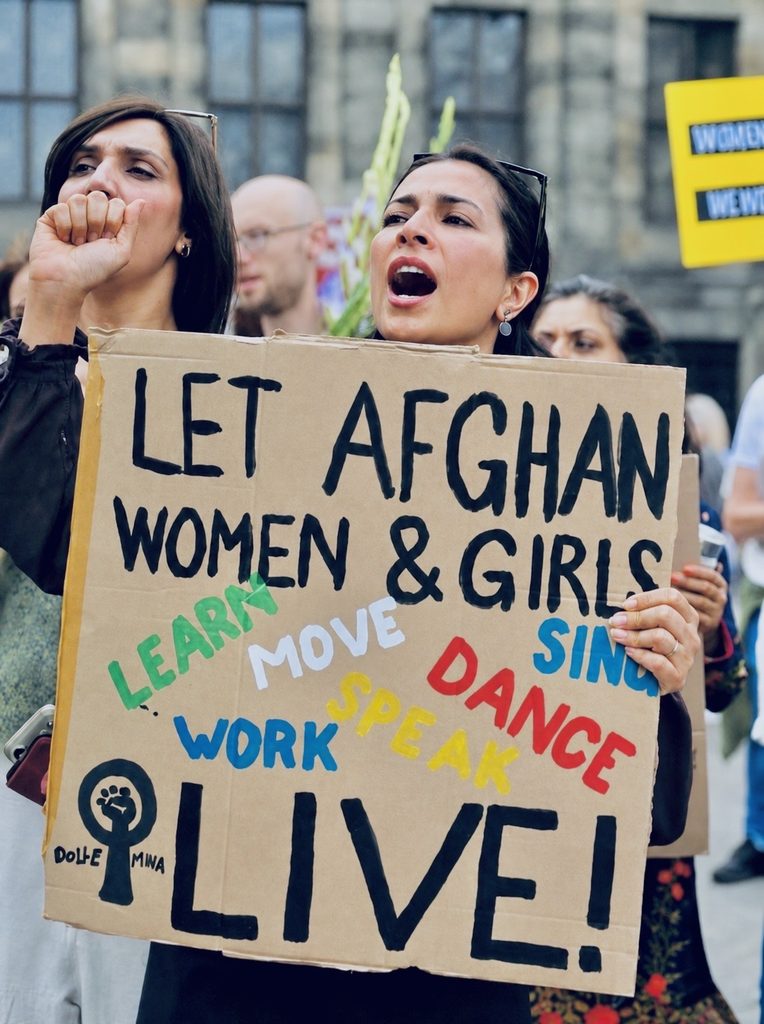
Although women take to the streets less often now, this is because their protests have been met with brutal punishment, including shootings, imprisonment, threats, and sexual violence. But Afghan women have not given up. They continue to find new ways to resist, sometimes in the most creative and courageous ways: shouting from rooftops, burning images of Taliban leaders in the privacy of their homes, or wearing red lipstick and sharing their pictures on social media.
Women also continue to organise gatherings in different places to protest against the Taliban. And resistance is not always a street protest. Secretly studying, attending online classes and universities, reading, writing, telling their stories, thinking freely, dreaming, and refusing to surrender are all acts of resistance. To me, this is an undeniable reality: Afghan women continue to resist the Taliban’s system and ideology, even when the world cannot see them.
What role do poetry and art play in resisting censorship and expressing freedom under the Taliban?
You may find it interesting that the Taliban have even issued decrees restricting poetry. They have banned love poetry and poems accompanied by music. Books on poetry, literature, and philosophy have been removed from bookstores. At poetry gatherings, only men are allowed to recite, and even then, the poems are expected to support Taliban ideology.
In these circumstances, writing free poetry is an act of resistance. It is a way of preserving Afghanistan’s rich cultural heritage, but also of finding the strength to endure.
Poetry is deeply woven into everyday life in Afghanistan. Children learn the works of Hafez, Saadi, and Khayyam in mosques before they even begin school, often memorising dozens or even hundreds of verses. Even grandmothers with no formal education carry poems in their memory. Poetry is present at important cultural and historical occasions; it is part of who we are.
Today, poetry remains both a refuge and a source of strength for the Afghan people. The Taliban may try to silence it, but they cannot erase something that lives so deeply in people’s hearts and memories.
How are Afghanistan’s cultural heritage, literature, and arts being affected by the Taliban’s policies, particularly for women artists and writers?
As I mentioned earlier, there are severe restrictions on art and culture in Afghanistan, especially for women. The Taliban have little connection to Afghanistan’s rich civilisational and cultural heritage. Their rigid interpretation of religion does not even reflect the culture of Afghan society today.
During their first period in power, they destroyed the Bamiyan Buddhas, an important part of Afghanistan’s historical and cultural heritage. They have also burned books and opposed music, theatre, cinema, photography, painting, and poetry. Their approach is deeply dogmatic and leaves little room for cultural expression or independent thought.
Today, women continue to write poetry in secret, often with nowhere safe to publish their work. I teach creative writing online to girls in Afghanistan who have turned to writing and storytelling as a refuge, despite the risks and dangers they face. For them, writing is not simply an artistic practice; it is a way to preserve their voices and hold on to their identities.
What role should neighbouring countries, especially India, play in supporting Afghan women, civil society, and Afghan refugees?
The role of Afghanistan’s neighbouring countries is extremely important. History has shown how much regional solidarity and support can mean to the Afghan people. India, in particular, has long been a country whose friendship many Afghans have trusted. I believe political interests should never come at the expense of human rights. Countries must not sacrifice the rights and dignity of the Afghan people for political convenience.
I would like to share a personal experience. When Afghanistan fell to the Taliban in 2021, I was a PhD student in India and held a ten-year visa. Because of the Covid-19 pandemic, I was attending classes online and was not in India at the time. On the night Kabul fell, the first message I received was that my Indian student visa had been cancelled. I was shocked. I had always believed that if Afghanistan ever faced a political catastrophe, India might be a place where I could seek refuge. That was how much I trusted the friendship between our two countries.
Unfortunately, after the fall of Afghanistan, many things changed. My experience is just one example of a much wider reality faced by Afghans. I hope India and other regional countries will place human rights, compassion, and the protection of Afghan women and refugees at the centre of their policies, rather than allowing political calculations to overshadow these responsibilities.
What dangers do you see in international efforts and diplomatic negotiations that normalise relations with or recognise the Taliban government?
I want to be very clear: any form of engagement with the Taliban is a betrayal of the people of Afghanistan, especially Afghan women.
Today, Afghanistan has become a vast prison for its people. Human rights have been stripped away, and freedom of expression, democracy, the will of the people, culture, and language are all under attack. What is happening in Afghanistan is a catastrophe, and its people do not deserve this suffering. Recognising the Taliban would disgrace any country that claims to believe in human rights.
How has exile affected your life, and what gives you the strength to continue and maintain hope despite the challenges?
The fall of Afghanistan took everything from me: my country, my city, my family, my social and cultural roots, my work, and my dreams and plans for the future.
Exile means surviving and starting from zero in a society where everything is unfamiliar. It means breaking inside a thousand times a day. Everything becomes something you long for. Even going home becomes a dream. It has been five years, and I still haven’t been able to touch my mother’s grave.
What gives me hope is the belief that Afghanistan belongs to me and to all its people. We are its rightful owners, and one day, at whatever cost, we will have our country back. I dream of an Afghanistan where everyone can live together in safety, freedom, justice, and equality, a country that is a friend to its neighbours and the world, not a threat to them.
What message would you like to share directly with young Afghan girls who feel forgotten by the world?
Sadly, Afghan women and girls have been forgotten by the world. But I want to tell them: no dictatorship lasts forever. Keep dreaming and stay strong. I believe Afghanistan will one day have a government where women and men can live side by side freely. Wherever we are, we must keep fighting for a free Afghanistan and stand firm in our rightful demands.
Afghan women and girls are the heroes of this country, and they will not surrender. Your years of struggle will not be in vain. I believe that, one day, they will lead to freedom.