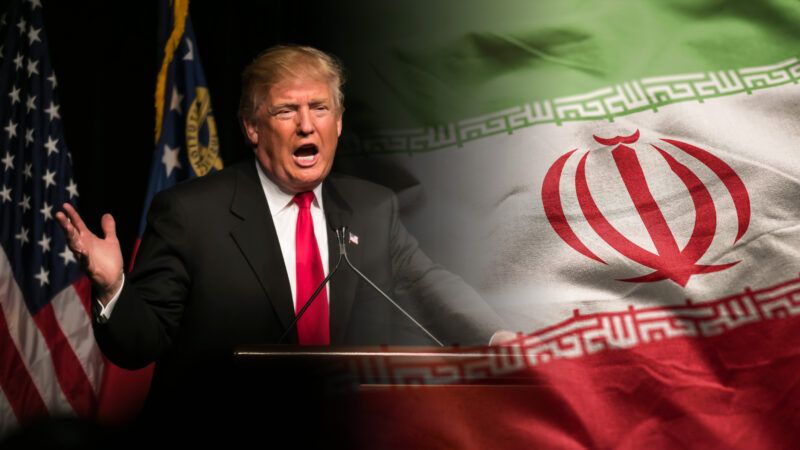
On polling day, November 3, Donald Trump confirmed a strike on a newly built anti-aircraft site on Iran’s Qeshm Island, waving it away as minor while telling reporters the US stood ready to go further. By the next morning, Democrats had won both chambers of Congress, unseating Susan Collins in Maine and flipping Senate seats in places as unlikely as Texas and Ohio.
Those two events belong in the same frame. Most American voters were thinking about petrol prices and the cost of living. For West Asia, and for India, the result is about something else: the domestic foundations of a war that began on February 28 and has never quite ended.
The comfortable reading is that a Democratic Congress will now rein Trump in. It will not, at least not in the way that matters. The midterms will not reverse his Iran policy; they will change the conditions under which he pursues it. What emerges is a president more constrained at home and less predictable abroad, and a region that has stopped waiting for Washington to make up its mind. New Delhi should read that as a cue to act, not to watch.
The Purse, Not the Trigger
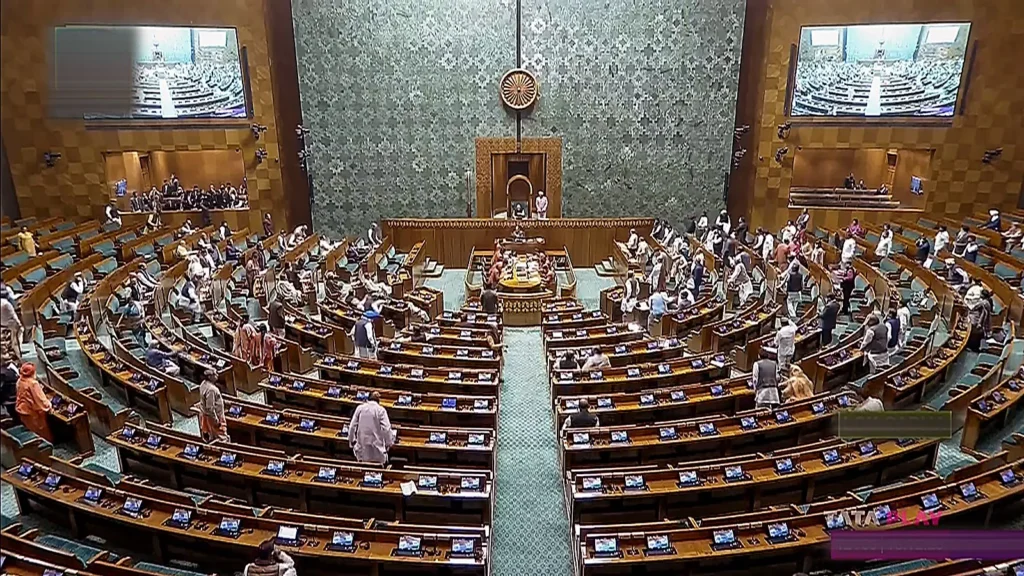
From January, the new majorities will control supplemental war funding, chair the armed services and foreign affairs committees, and hold the power to subpoena officials over war aims that have drifted from nuclear rollback to control of Hormuz and back again. They can slow arms transfers and attach reporting conditions that turn every escalation into a public argument. What they cannot easily do is stop a determined commander-in-chief. Trump would veto a war powers resolution, and neither chamber is likely to find the two-thirds needed to override him. The sanctions architecture built over two decades will not be dismantled either; Democrats wrote much of it. Nor should anyone mistake the Democratic caucus for a peace bloc. On Iran’s nuclear programme and Israel’s security, plenty of Democrats sit closer to the White House than to Tehran. What changes is not the direction of American policy so much as the price of pursuing it.
The Lame-Duck Window
Until the new Congress is sworn in on January 3, the outgoing Republican majorities still sit, and the electoral cost of escalation has already been paid. In September, Trump had told staff he saw a renewed bombing campaign as likely once the midterms were over. The Qeshm strike looks less like a one-off than a marker. Trump has also floated hitting Iran’s suspected underground nuclear complex, an option that would have been politically reckless a week ago and is merely risky now.
None of this proves a wider war has been decided. In the same breath, Trump insisted Iran wanted a settlement as soon as possible, which is the language of a man looking for a deal he can sell. But a president who has just lost Congress has two familiar routes to a legacy: a diplomatic breakthrough abroad or a show of resolve that his opponents cannot block in time. Trump has always kept both doors open, and weakness at home makes his choice harder to read, not easier.
Tehran’s Temptation
Iran will be tempted to read the result as proof that time is on its side. Its parliament speaker has already told mediators the ball is in Washington’s court, and on Tuesday Tehran dismissed the latest American reply to its seven conditions for reopening Hormuz as unconvincing. The logic is simple: hold the strait, wait out a president whose room at home is shrinking, and court the Democrats who’ll run oversight from January.
That would be a misreading. Months of on-and-off strikes have degraded Iran’s conventional forces and deepened the damage to an already ailing economy, now squeezed further by a naval blockade of its ports. Hormuz is leverage only for as long as it is not tested.
Nor can Tehran play Capitol Hill against the Oval Office for long. The president still decides on strikes, and he is the one who would sign any deal. Courting Congress helps Iran only if it produces terms Trump can present as his own victory.
The Gulf Stops Waiting
The most consequential shift may be happening outside Washington and Tehran altogether. Qatar is now passing proposals between the two sides in real time and has said it hopes for an interim deal covering Hormuz and the blockade of Iranian ports. Oman’s understanding with Iran on safe shipping lanes, which Tehran briefed to Riyadh, points the same way.
Gulf capitals whose airports, refineries and diversification plans sit within drone range have stopped waiting for American decisions and started shaping them. That turns the old US-Iran-Israel triangle into something messier and more multipolar.
Israel can still count on bipartisan support for its security, but it will face sharper questions about open-ended American commitments. Saudi Arabia and the UAE now want de-escalation more than they want Iran humbled. And China, which buys Gulf energy and sells to everyone, gains diplomatic space every time Washington looks divided.
India Cannot Afford to Watch
For New Delhi, this is not a spectator’s question. A large share of India’s crude and gas imports pass through Hormuz, close to nine million Indians live and work in the Gulf, and their remittances sustain household incomes from Kerala to Uttar Pradesh. Chabahar and the International North-South Transport Corridor, India’s route to Central Asia that bypasses Pakistan, depend on an Iran that is neither collapsing nor permanently boxed in by sanctions.
The instinct in South Block will be to wait and see. That would be a mistake. Strategic autonomy was never meant to be a posture of abstention; it is the freedom to talk to everyone, and India is one of very few states with working ties to Washington, Tel Aviv, Tehran, Riyadh, Abu Dhabi and Doha at once. An asset like that depreciates if it’s never used.
Three moves would put it to work. First, back the Gulf-led mediation quietly but visibly, including by offering the Indian Navy’s experience escorting merchant shipping under Operation Sankalp to any agreed arrangement for safe passage through Hormuz. Second, use I2U2 and IMEC to make the point that West Asian connectivity needs a settlement, not another round of strikes. Third, open conversations with the incoming congressional leadership now. A sanctions carve-out for Chabahar was secured in Washington once before, and it may need to be secured again.
A Divided Washington, a Crowded Region
The midterms did not settle America’s Iran policy. They split it between institutions that will fight over it for the next two years: Trump keeps the trigger and the pen, while Congress now holds the purse and the microphone.
The question for West Asia is no longer just whether Washington can contain Iran. It is whether a divided Washington can sustain any regional strategy at all, and who fills the space if it cannot.