The Parliamentary Impasse
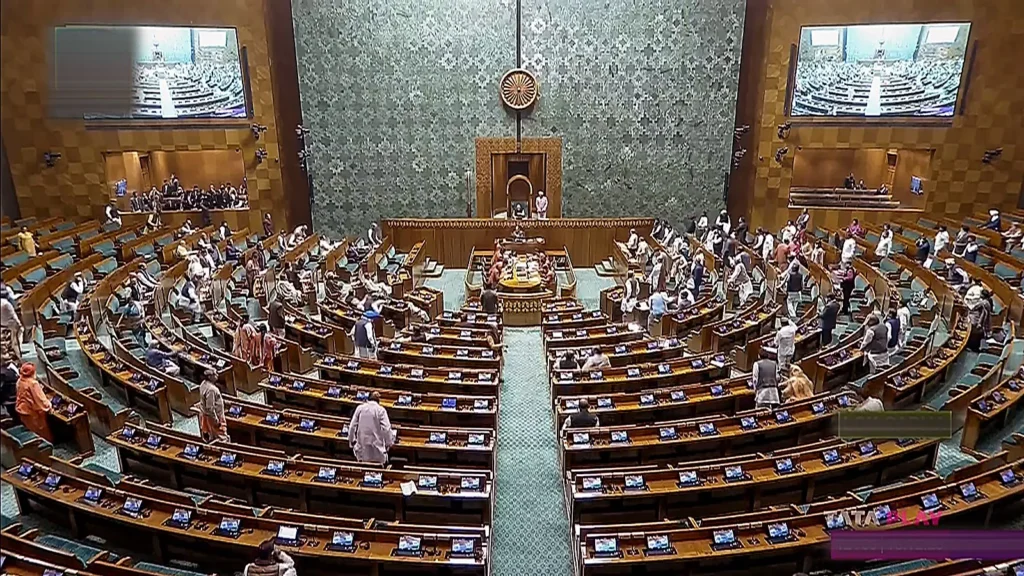
Recently, the GOI’s twin objectives have been to advance the delimitation process and roll out women’s reservation by the 2029 Lok Sabha polls. However, the last Monsoon Session of Parliament ended without resolving one of the most consequential political questions before the nation: how, and on what terms, India should undertake the next delimitation of parliamentary constituencies. This impasse also casts uncertainty over the implementation of the Nari Shakti Vandan Adhiniyam and, consequently, the promised expansion of women’s representation in Parliament.
Hence, what was expected to become a substantive debate over representation, federal balance and the political consequences of population-based redistribution instead remained entangled in a broader parliamentary stalemate. There could be umpteen reasons for the aforesaid, but at its core lie the procedural opacity surrounding the delimitation proposals and the highly contentious FCRA amendments. Clearly, the government needs to build consensus on delimitation first, which involves determining and redrawing the boundaries of electoral constituencies for political representation.
While women’s rights cannot hinge on such demographic technicalities alone, the issue has become increasingly entangled with the politics of delimitation. The 2023 Nari Shakti Vandan Adhiniyam itself implemented women’s reservation contingent upon a census followed by delimitation. Despite the government’s assurances, the 131st Constitution Amendment Bill failed to secure the mandatory two-thirds special majority required in the Lok Sabha, falling short by 54 votes despite receiving 298 votes in favour. Hence, the related bills could not proceed on April 17 earlier this year. This amendment sought, among other things, to alter the mechanism through which the women’s reservation under the 106th Constitutional Amendment would become operational. Consequently, the Opposition has vehemently argued that women’s reservation must be delinked from delimitation and implemented within the existing 543 Lok Sabha seats.
The Federalism Question
This historic defeat demonstrates how profoundly contentious the underlying structural mechanisms of the country’s federalism are. Crucially, advancing constitutional amendments for political ends could risk misrepresenting ground realities. Moreover, basing delimitation on the 2011 Census disregards India’s enormous urbanisation and internal migration over the last fifteen years, thereby signalling the government’s uncertainty about implementing Census 2027. Furthermore, delinking delimitation from the latest Census implies a clear lag between actual population growth and political representation.
Congress MP Shashi Tharoor insisted that the solution could be sought in the European example, wherein the principle of degressive proportionality is applied to the composition of the European Parliament, as its member states face a similar conundrum of small and big states coexisting in one Union. However, degressive proportionality, while normatively appealing as a mechanism to balance federal asymmetries, risks undermining the democratic principle of electoral equality. When superimposed on an already complex reservation framework, it may produce representational distortions.
At present, if the government is keen to strengthen its record of advancing women’s empowerment, the simplest way would be to enforce the quota in the 543-seat Lok Sabha and in state legislatures right away. However, experts insist that keeping the Lok Sabha’s seats fixed while implementing 33% women’s reservation is impractical in the long term.
Delimitation is controversial since the redistribution of seats could alter the political influence of different states, with the existing North-South divide further exacerbating the dispute. While many argue that women’s reservation should not be tied to delimitation, the other side of the debate suggests that freezing seats to reward family planning runs counter to the principle of one person, one vote. Thus, the conundrum lies in how to increase the seats proportionally. One needs to balance population growth with the implementation of women’s reservation without undermining the interests of states that have successfully managed population growth.
Reconciling Two Democratic Principles
Delimitation is a necessary exercise in keeping democratic representation consistent with demographic change. Yet, its timing poses questions about federal equity. Such concerns warrant thorough deliberation and recalibration of the proposed framework rather than abandoning the exercise altogether.
Moreover, this debate is frequently confined to the well-known North-versus-South confrontation. While the southern states dread losing their political influence, the Centre insists that representation should not remain frozen indefinitely. Both stances are grounded in some truth. The fundamental challenge lies in reconciling two democratic principles that are increasingly at odds, namely, equal representation of citizens and fairness between the constituent states.
In the absence of consensus and good-faith deliberations, what may appear to be a victory for either side may prove counterproductive for our parliamentary democracy. Such a closed attitude offers little resolution to the substantial questions related to democratic decision-making. Although a parliamentary majority is a statutory requirement, democracy is not restricted to it. Thus, genuine efforts must be made to reduce conflict, with Parliament acting as a forum for deliberation and consensus-building on national issues.
Some experts have suggested that the BJP has had a sounder logic on its side. As was widely expected, the government did not seek to enhance the voting power of the Hindi belt. Moreover, the constitutional freeze on readjustment was not conceived as a permanent suspension of the relationship between population and representation. Thus, the opposition should have supported the amendments. However, the recent trend of passing legislation without adequate parliamentary debate must also be discouraged.
A fresh delimitation will be triggered by the existing provisions of Articles 81 and 82 soon after the data of the 2027 Census are published, if the relevant constitutional provisions are not amended. This would render a fresh delimitation exercise legally unavoidable, thereby potentially altering the balance of Lok Sabha representation among different states.
Thus, the government’s push to overhaul the system is commendable, but it has failed to resolve the palpable tensions. To ensure democratic legitimacy, the government should widely circulate its delimitation proposals and actively invite feedback from all stakeholders, particularly seeking consensus with parties still sitting on the fence, like the DMK, whose concerns must not be dismissed as self-interest. Legal experts have pointed out that the bills may be referred to Joint Parliamentary Committees or Standing Committees, where representatives from diverse political ideological backgrounds can debate proposals and suggest amendments.
Furthermore, Union Home Minister Amit Shah has assured southern states that their political representation will not shrink, as a proposed 50% overall expansion of the Lok Sabha to 816 seats will allow every southern state to gain seats proportionally. However, the question of women’s reservation, long deferred, further complicates the picture.
The Women’s Representation Imperative
Women’s political representation has a considerably longer history than the current delimitation controversy. From the Constituent Assembly debates to the constitutional reservation of seats for women in Panchayats and municipalities, and eventually to the persisting demand for representation in state legislatures and Parliament, the question of women’s increased political representation has survived across successive governments and umpteen political formations in India.
While women’s representation and delimitation are related administratively, they address separate democratic issues. The former concerns the under-representation of women, while the latter involves the challenge of seat distribution between constituencies and states. Therefore, the way forward is to ensure that women’s political representation is not compromised and does not become collateral to the more contentious federal negotiations surrounding delimitation. Thus, the linkage between the two does deserve reconsideration.
Moreover, the GOI must build a broad political consensus on delimitation while simultaneously exploring constitutionally viable mechanisms to operationalise women’s reservation without waiting indefinitely for a consensus. The women’s reservation debate implies equitable power-sharing, while the delimitation debate highlights the friction of federal power-sharing.
Whether through implementation within the existing strength of the Lok Sabha or through a time-bound delimitation process, the long-standing promise of one-third representation for women must be translated into a political reality at the earliest. Most importantly, delimitation should be carried out on contemporary and credible data, with a transparent methodology, arrived at through sufficient political consensus.