India faces more than an economic challenge or political confrontation. It faces a deeper crisis of institutional credibility.
A nation can withstand a falling currency, rising fuel prices and political disagreements. The real danger begins when citizens question whether institutions are functioning independently, transparently and without fear or favour.
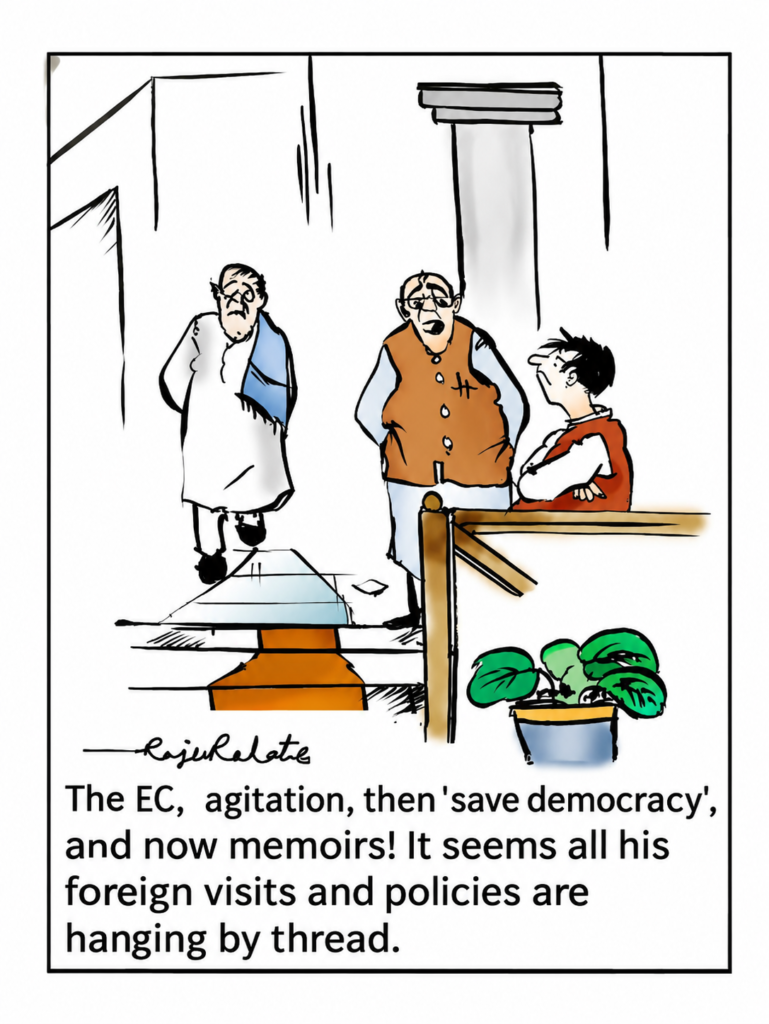
The warning signs are hard to ignore. A weakening rupee, concerns over ethanol-blended fuel, allegations of electoral manipulation, questions over offerings at the Ram temple and restrictions on the country’s best-known protest venue may be separate controversies. Together, however, they raise a larger question about accountability and public trust.
Why must citizens demand credibility from institutions rather than expect institutions to earn it? This is not about the government versus the Opposition. It is about the relationship between the Indian citizen and the state, and the public’s right to demand answers from those in power.
Rupee: Global Headwinds, Domestic Accountability
The rupee reportedly touched 96.60 against the US dollar, making it one of Asia’s worst-performing currencies in 2026. The Iran conflict, high crude oil prices, geopolitical uncertainty and volatile foreign portfolio investments have intensified pressure on emerging economies.
But global headwinds cannot become a permanent excuse for domestic economic weaknesses. India aspires to be an economic powerhouse, a major investment destination and a global manufacturing hub. These ambitions demand greater economic resilience.
Why does an economy aspiring to global leadership remain so vulnerable to imported energy costs and volatile capital flows?
A weakening rupee erodes purchasing power, raises import costs, makes overseas education more expensive and squeezes businesses dependent on imported inputs. The government cannot claim credit for a strong rupee but blame global factors for its decline. Economic accountability must work both ways.
E20: Consumer Confidence at Stake
India’s achievement of its 20 per cent ethanol-blending target ahead of schedule is undoubtedly significant in terms of energy security and reducing dependence on imported crude oil.
However, policy success must ultimately be measured by its impact on citizens. A LocalCircles survey cited in the original report suggests that 66 per cent of owners of older vehicles reported a significant decline in mileage following the introduction of higher ethanol blending.
Petrol dealers have reportedly sought a reconsideration of the rollout. A consumer court has also directed a carmaker to refund or replace a vehicle following allegations of engine damage associated with blended fuel.
These concerns warrant serious examination. The issue is not whether ethanol blending is desirable. It is whether consumers were adequately informed, vehicle compatibility was properly addressed and appropriate safeguards were put in place before implementation.
Why should vehicle owners bear the financial consequences of a national policy without adequate information or meaningful recourse? Why should they have to discover compatibility problems through expensive repairs?
A government that constantly speaks of consumer empowerment must also demonstrate its commitment to consumer protection. National progress must be measured not merely by targets achieved but also by the confidence and convenience of the people expected to pay for them.
‘Vote Chori’: Electoral Integrity at Stake?
Electoral integrity is among the most sensitive issues confronting Indian democracy. Rahul Gandhi has alleged that nearly one in six BJP MPs won through electoral manipulation, while the Congress claims its Vote Chori campaign has reached more than 1,000 districts.
These serious allegations require evidence, not political rhetoric. The Election Commission has rejected the charges and sought supporting evidence on affidavit. That is legitimate. But institutions must also recognise that their credibility depends on transparency and public confidence.
During October protests, prohibitory orders were imposed across New Delhi district, internet services around Jantar Mantar were reportedly suspended, and more than 150 protesters, including Yogendra Yadav, were detained.
Public order must be maintained, but peaceful dissent is equally fundamental to democracy. The Election Commission must address specific complaints transparently rather than expect unquestioning acceptance of its authority.
Equally, the Opposition cannot turn allegations into facts without evidence. Electoral integrity cannot be defended through political rhetoric or institutional assertions. It must rest on verifiable evidence and transparent scrutiny.
‘Chanda Chori’: Faith and Accountability
The alleged misappropriation of offerings at the Ram temple in Ayodhya raises serious concerns. Reports put the amount at nearly Rs 200 crore. Eight people named in the FIR have reportedly been arrested, while investigators are examining five years of banking records across seven banks.
The allegations remain unproven but raise questions about financial oversight at an institution that commands the faith of millions. Devotees deserve assurance that their offerings are safeguarded and properly accounted for.
Who was responsible for protecting the funds? What financial controls and independent audits were in place? Were irregularities detected in time?
The Congress has questioned whether the probe is confined to lower-level functionaries and demanded a Supreme Court-monitored investigation. The BJP has maintained that those responsible will not be spared. Neither political claim can replace an independent probe.
The temple’s moral credibility must take precedence over its political symbolism. Faith cannot be a shield for financial opacity. Devotees deserve answers, not assurances.
Jantar Mantar: A Question of Consistency
The Jantar Mantar controversy raises serious questions about administrative consistency. On October 11, Delhi Police denotified it as a protest venue, shifting demonstrations to Ramlila Maidan, Burari and CBD Grounds. On October 13, police reportedly told the Delhi High Court that the decision followed a Supreme Court order. Two days later, the Centre disputed this before the Supreme Court.
The court subsequently questioned whether the decision reflected an application of mind. Police cited safety and traffic concerns, although Jantar Mantar had been described as an authorised protest venue in July.
The contradictions raise obvious questions: If the venue was unsuitable, why was it previously authorised? What changed? And if the Supreme Court had directed its closure, why was that explanation disputed?
Authorities have the right to regulate public spaces, but such decisions cannot be arbitrary or inconsistent. Restrictions on the constitutional right to peaceful assembly must rest on clear, consistent and legally sustainable grounds. Citizens deserve a credible explanation, not shifting justifications.
Bigger Problem: Selective Accountability
The government’s arguments deserve consideration. Global pressures have weighed on the rupee, ethanol blending has reportedly saved Rs 1 lakh crore in foreign exchange, and a Home Ministry committee has cited safety and traffic concerns over Jantar Mantar.
Electoral allegations remain unproven, and the temple investigation is ongoing. But neither circumstance absolves institutions of the need to answer questions. The government cannot demand unquestioning trust, just as the Opposition cannot turn allegations into political verdicts.
Institutions must remain above political influence. The Election Commission must command public confidence, investigating agencies must pursue wrongdoing without favour, and the police must protect peaceful dissent, even when it challenges the government.
Policymakers must explain the consequences of their decisions, not merely celebrate targets. Religious institutions must ensure financial transparency. These are not political demands but the basic obligations of a functioning democracy.
Stronger Institutions, Not Loud Defence
India’s greatest strength lies not in the dominance of any leader or political party but in the promise of its constitutional institutions. Governments change, parties rise and fall, and leaders pass into history. Institutions must endure.
The danger begins when questioning authority is equated with hostility towards the nation, demands for transparency dismissed as political conspiracies and peaceful dissent treated as an inconvenience.
Economic growth, infrastructure and investment matter, but they cannot substitute for institutional accountability. India’s ambition to become a developed nation must rest equally on public confidence, constitutional integrity and the assurance that the law applies equally to the powerful and the powerless.
The rupee may recover, grievances may be resolved, allegations may be disproved or established, and investigations may conclude. But rebuilding public trust is far harder.
A confident government should welcome questions, and independent institutions should not fear scrutiny. No government is infallible. What matters is its willingness to acknowledge mistakes, correct them and accept accountability without treating criticism as hostility.
A nation does not become great because its government demands trust. It becomes great when its institutions earn it. That is the test India must not fail.