The United Arab Emirates (UAE) has nominated senior diplomat Lana Zaki Nusseibeh for the post of United Nations secretary-general. Her entry adds a new contender to an already complex race. The contest is shaped by geopolitical rivalries, competing regional interests and allegations that the UAE has supported one side in Sudan’s civil war. Abu Dhabi denies the allegations.
GCC backs UAE candidate
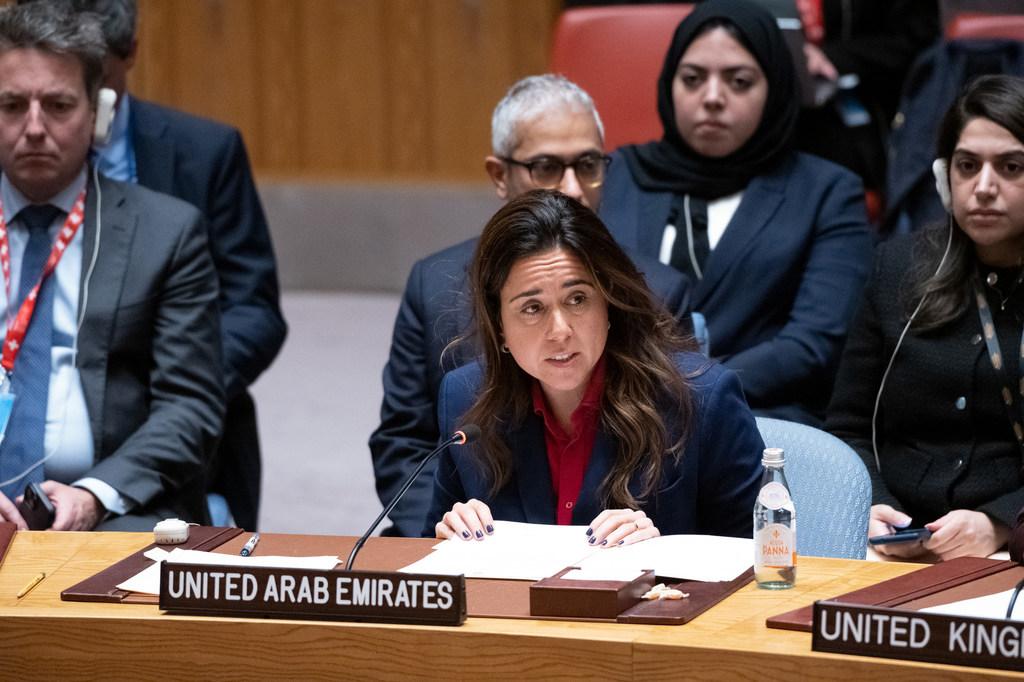
Nusseibeh, the UAE’s minister of state for foreign affairs, was formally nominated on October 21. The six members of the Gulf Cooperation Council (GCC) unanimously endorsed her candidacy the following day, giving her a significant regional diplomatic bloc behind her bid to succeed António Guterres, whose term ends on December 31.
The nomination comes as the selection process struggles to produce a consensus candidate. Nusseibeh has said she wants to restore the UN’s role as a diplomatic problem-solver and rebuild trust in multilateral cooperation. If appointed, she would become the first woman to lead the organisation in its 80-year history.
She served as the UAE’s permanent representative to the UN from 2013 to 2024, including during the country’s two-year tenure on the Security Council in 2022–23. She has also served as a vice-president of the General Assembly and president of UN Women’s Executive Board.
Her diplomatic experience, however, is accompanied by scrutiny of her country’s foreign policy, particularly allegations that Abu Dhabi supported Sudan’s Rapid Support Forces (RSF), which has been accused of widespread atrocities during the war against Sudan’s armed forces.
Sudan allegations put UAE policy under scrutiny
Human Rights Watch, in a report published in May, documented evidence it said linked UAE-based interests to the recruitment and deployment of Colombian private military contractors fighting alongside the RSF. The UAE has repeatedly denied providing military support to either side in the conflict.
The allegations have assumed particular significance following the RSF’s capture of El-Fasher in October 2025. The UN said at least 6,000 people were killed during the group’s attack on the city. Researchers have described the killings as bearing the hallmarks of genocide, although such assessments must be distinguished from a final judicial determination.
Critics argue that the allegations could raise questions about the impartiality expected of the UN’s chief administrative officer. Nusseibeh has previously represented and defended her government’s position on Sudan. Her supporters, meanwhile, point to her diplomatic experience and efforts to secure humanitarian assistance for Palestinians in Gaza.
The selection process is governed by Article 97 of the UN Charter. The Security Council recommends a candidate, and the General Assembly appoints the secretary-general.
The 15-member Security Council conducts informal, confidential straw polls to assess support for candidates. Its five permanent members — China, France, Russia, the United Kingdom and the United States — can effectively block a candidate by opposing the recommendation. The General Assembly cannot appoint a candidate who has not been recommended by the Council.
Who else is in the race?
Other candidates in the contest include Rafael Grossi, director-general of the International Atomic Energy Agency; Rebeca Grynspan, former vice-president of Costa Rica; and María Fernanda Espinosa, Ecuador’s former foreign minister. Guyana’s Carolyn Rodrigues Birkett, Uganda’s Olara Otunnu and Ivonne A-Baki, nominated by Tonga, are also in the race.
The UN has held several rounds of straw polls, but their results remain confidential. No date has yet been announced for the Security Council’s formal recommendation or the General Assembly’s appointment.
Two tests for Nusseibeh
Nusseibeh’s candidacy therefore faces two tests: whether she can secure sufficient support among the Security Council’s permanent members and whether the questions surrounding the UAE’s alleged role in Sudan will affect the confidence of UN member states.
The final decision will rest not with the GCC or any individual regional bloc, but with the Security Council and General Assembly under the UN Charter.