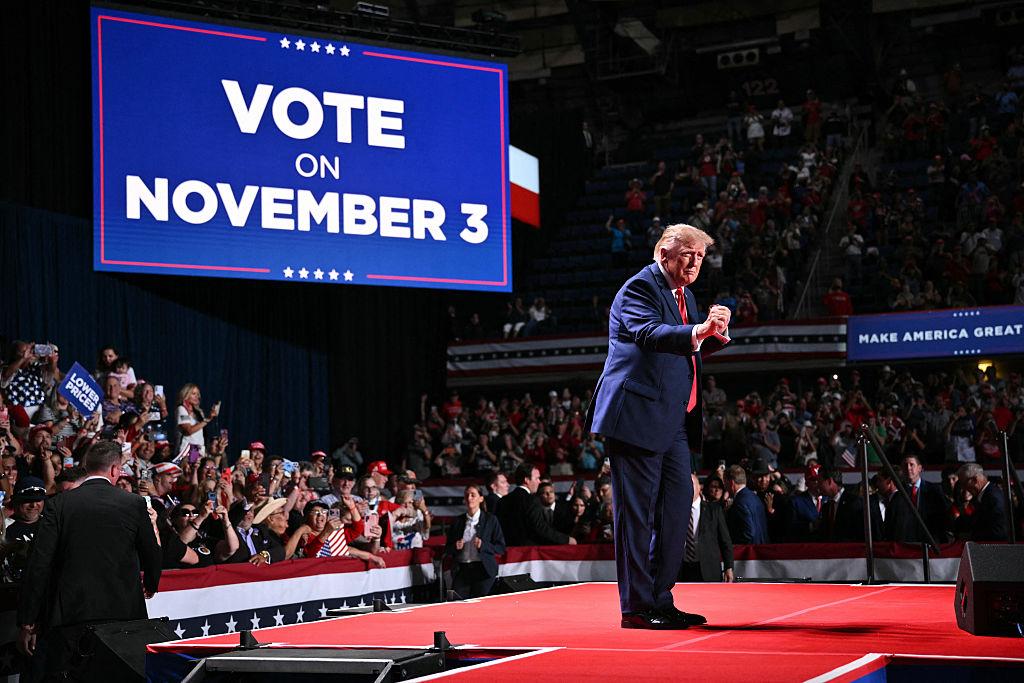
The war with Iran and rising household expenses have become central issues in the US midterm election campaign, with economic concerns threatening to overshadow President Donald Trump’s foreign policy arguments as voters prepare to elect a new Congress on November 3.
A Reuters/Ipsos poll conducted from 30 September to October 5 found that 78 per cent of 4,506 US adults believed Trump’s policies bore at least some responsibility for rising prices that were outpacing their earnings. The figure included 64% of Republicans and 76% of independents, indicating that dissatisfaction extended beyond Democratic voters.
The poll was conducted online using Ipsos’s probability-based KnowledgePanel and was designed to represent the US adult population. Its margin of sampling error was approximately 1.5 percentage points for the full sample at the 95 per cent confidence level; the margin was higher for smaller political subgroups. The findings measure public perceptions and do not establish that any single policy caused the increase in prices.
The survey found that 54 per cent of respondents believed the cost of living had increased substantially over the previous year, while 30 per cent said it had risen a little. Inflation, import tariffs and higher energy costs associated with the Iran war were among the factors cited in the political debate.
Fuel costs put foreign policy in domestic spotlight
The conflict, which began in February, has disrupted energy trade and pushed up fuel prices. The effects have been felt directly by motorists and businesses, while higher transport and production costs threaten to feed into prices elsewhere.
Reuters reported in October that the average US petrol price had reached $4.36 a gallon, compared with $3.11 a year earlier. Diesel prices had climbed to $6.28 a gallon, adding pressure on trucking, agriculture and other fuel-intensive industries.
The conflict has also complicated the administration’s efforts to deliver on Trump’s campaign promise to lower prices. The president has defended his economic record, arguing that tax cuts and other measures would benefit households, while his administration has described the increase in energy costs as a temporary market disruption caused by the conflict.
However, the poll found that 68 per cent of respondents disapproved of Trump’s handling of inflation, including 40 per cent of Republicans. The findings suggest that concerns about purchasing power are not confined to voters opposed to the president.
Economic indicators present a mixed picture
The political debate is unfolding against an economy that shows both resilience and pressure points. Inflation stood at 3.7 per cent annually ahead of the election, up from 3 per cent when Trump returned to office in January 2025, according to an Associated Press review of economic indicators. Unemployment remained relatively low at 4.2 per cent, but monthly job creation had slowed to approximately 39,000, compared with more than 121,000 before Trump’s return to the White House.
Economic growth has continued, averaging slightly above 2%, while higher borrowing costs have made mortgages, car loans and other credit more expensive. The figures indicate that the US economy has not stopped growing, but households continue to face pressure from prices, fuel expenses and financing costs.
Republicans face a difficult campaign message
The findings have complicated Republican efforts to defend their congressional majorities. Some Republican candidates have distanced themselves from aspects of Trump’s foreign and trade policies, while Democrats have linked the war and tariffs to higher household expenses.
The election will determine control of both chambers of Congress for the next two years. A change in control could affect the administration’s domestic legislative agenda and increase congressional scrutiny of its foreign policy, including the war with Iran.
Nevertheless, the poll does not establish how voters will ultimately cast their ballots. Economic concerns are only one influence on voting decisions, and views on immigration, taxes, national security and other issues remain relevant.
The immediate political test is whether the administration can convince voters that its economic policies will ease the pressure on household budgets, despite the continuing conflict and higher energy costs.
As Americans prepare to vote, the Iran war is no longer confined to questions of military strategy and diplomacy. Its economic consequences have become part of the domestic debate over prices, jobs and the performance of the administration.