India has lifted an estimated 496 million people above the international lower-middle-income poverty threshold over 12 years, recording one of the sharpest reductions in poverty in the world. Yet the scale of the achievement comes with an important qualification: millions remain economically vulnerable, rural poverty continues to exceed urban levels, and the gap between high-paid and low-paid workers remains substantial.
These findings feature in the World Bank’s Poverty & Equity Brief: India, October 2026, published on October 30, 2026. The assessment draws on household consumption and labour-market data to examine India’s progress between 2011–12 and 2023–24. The World Bank describes the country’s progress as “one of the fastest poverty declines in the world”.
The headline figure is striking. India’s extreme poverty rate fell from 27.1 per cent in 2011–12 to 2.6 per cent in 2023–24. The reduction was measured against the World Bank’s international extreme-poverty threshold of $3 per person per day, calculated using 2021 purchasing power parity (PPP).
However, the figure of 496 million refers to a different, broader poverty benchmark: the lower-middle-income poverty line of $4.20 per person per day. Under this measure, the proportion of Indians classified as poor declined from 57.7 per cent to 16.1 per cent over the same period.
The distinction is important. The two figures measure different levels of deprivation and should not be treated as interchangeable.
496 MILLION CROSSED POVERTY LINE
- Extreme poverty: 27.1% (2011–12) versus 2.6% (2023–24).
- Poverty at the $4.20 threshold: 57.7% versus 16.1%.
- People who moved above the $4.20 threshold: 496 million.
- People still below the $4.20 threshold: approximately 232 million.
Despite the improvement, approximately 232 million people remained below the $4.20-a-day threshold in 2023–24. Around 35 million continued to live in extreme poverty, according to the World Bank’s estimates.
The poverty thresholds are expressed in international purchasing-power terms, not converted at the prevailing dollar-rupee exchange rate. The $3 threshold was equivalent to approximately ₹58 per person per day in 2021 prices, while the $4.20 threshold was approximately ₹82.
The World Bank’s April 2026 India Development Update also documented these estimates, drawing on the 2011–12 Consumption Expenditure Survey and the 2023–24 Household Consumption Expenditure Survey. It calculated that the reduction at the $4.20 threshold represented an annual decline of approximately 3.5 percentage points over the 12 years.
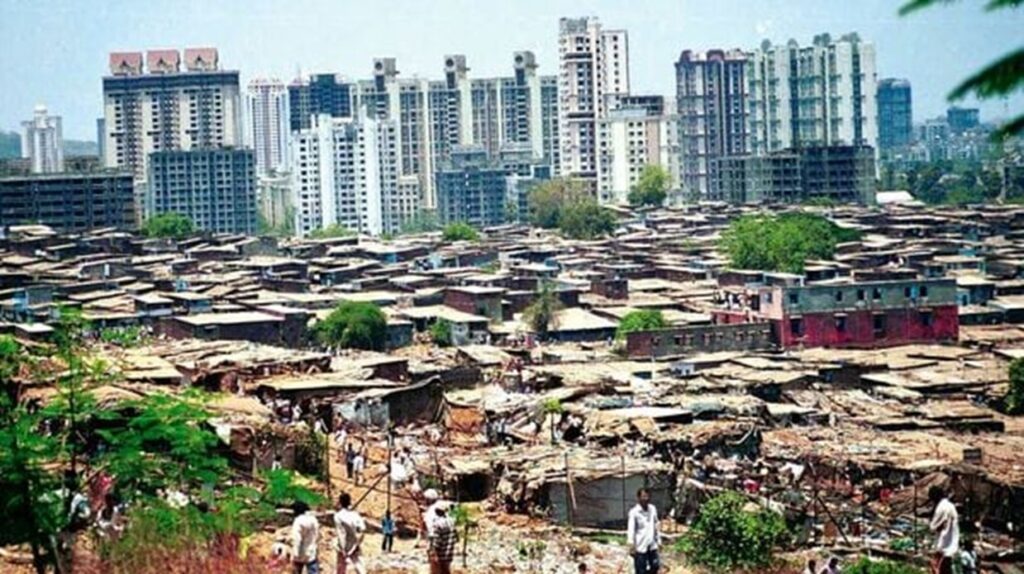
The improvement was visible in both rural and urban India, although the gap remains significant. Rural poverty at the $4.20 threshold declined from 64.9 per cent to 19.3 per cent, while urban poverty fell from 39.7 per cent to 8.6 per cent.
The figures show that rural households continue to face substantially greater economic vulnerability. Agriculture-dependent livelihoods, irregular employment and limited access to better-paid work remain important structural challenges.
What Drove the Decline?
The World Bank attributes the reduction primarily to stronger household consumption, employment growth and government support through social transfers, including subsidised food.
Employment increased by approximately 134 million between 2017 and 2023, according to the October assessment. A significant part of the increase came from rural women entering paid employment and contributing to household incomes.
Food subsidies have also played an important role in protecting vulnerable households from economic shocks. The expansion of social protection has helped sustain consumption, particularly among poorer families.
However, the employment figures need to be examined beyond the headline increase. A rise in the number of people working does not necessarily translate into an equivalent improvement in earnings or job security.
The World Bank has highlighted the concentration of employment growth in relatively low-productivity activities and the weakness of real earnings. In other words, more people may be working without necessarily experiencing a substantial improvement in their purchasing power.
This is an important distinction when assessing the quality of economic growth.
Persistent Income Divide
The assessment also draws attention to the continuing gap between India’s highest-paid and lowest-paid workers.
“Wage disparities, however, remain pronounced,” the World Bank observed, reporting that median earnings among the top 10 per cent of workers were approximately 13 times those of the bottom 10 per cent in 2023.
This comparison concerns median earnings within the two groups, not the average income of every individual in either category.
The finding raises a larger question about the distribution of the benefits of economic growth. Poverty can decline even when earnings remain highly unequal. A household may cross an international poverty threshold without gaining access to stable employment, adequate healthcare, quality education or sufficient savings.
The World Bank also cautions that household consumption surveys may underrepresent wealthier households, making it difficult to capture the full extent of inequality through consumption data alone.
THE EARNINGS GAP
TOP 10% EARN 13 TIMES MORE
- Top 10%: 13
- Bottom 10%: 1
Poverty Remains in East and North India
The geographical distribution of poverty presents another challenge. Approximately 57 per cent of India’s poor population is concentrated in a contiguous belt extending from Uttar Pradesh to West Bengal, according to the assessment.
This concentration has significant policy implications. National improvements in poverty reduction cannot obscure the fact that certain states continue to carry a disproportionate share of deprivation.
Creating productive employment, improving rural infrastructure, strengthening education and expanding access to healthcare in these regions will be essential to sustaining the gains.
The World Bank’s estimates also suggest that poverty will continue to decline, although at a slower pace. Its indicative projections put the lower-middle-income poverty rate at 14.2 per cent in 2026, potentially falling to 12.1 per cent by 2028. These are model-based estimates, not confirmed future outcomes, and could change with new economic and labour-market data.
Next Test is Economic Security
India’s reduction in extreme poverty is a significant development. But the remaining numbers reveal why the task is far from complete.
The 496 million figure measures how many people crossed a defined international poverty threshold. It does not establish how many have achieved financial security or escaped the risk of falling back into poverty.
The persistence of low-productivity employment, weak real earnings and substantial rural deprivation points to the next challenge: converting poverty reduction into sustained improvements in living standards.
The real measure of India’s economic progress will increasingly depend not just on how many people cross the poverty line, but on whether they can secure better-paying jobs, afford essential services and build financial resilience.
The World Bank’s findings therefore present two realities of the Indian economy: a substantial reduction in measured poverty and an unfinished struggle to make the gains of growth more secure and broadly shared.