Inside the firing investigation
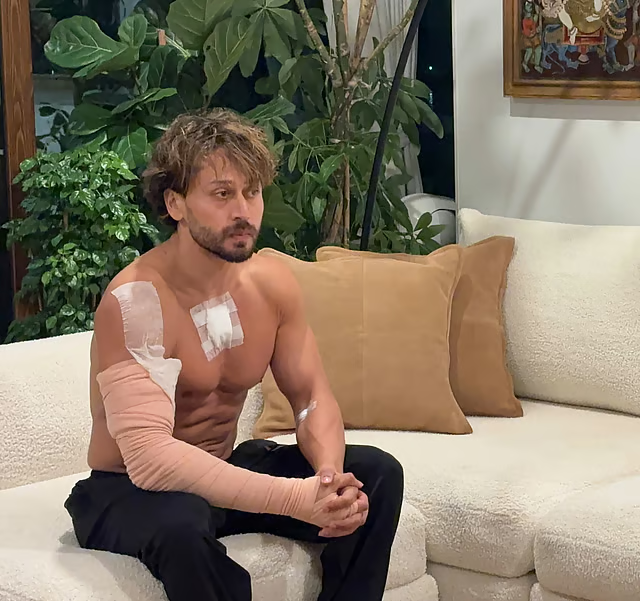
At about 7 pm on October 18, 2026, two gunmen allegedly opened fire at actor Tiger Shroff’s BMW outside Pushpa Narsee Ground in Mumbai’s Juhu area as he left after playing football. A third man waited on a motorcycle. Shroff escaped serious injury, but his driver, Firdous Ibrahim Baloch, was shot in the wrist and suffered a fractured finger. A bystander was also injured.
Mumbai Police said five rounds were fired before the attackers fled, reportedly after one firearm jammed. The case was registered for attempted murder and under the Arms Act.
What initially appeared to be a targeted shooting soon developed into a wider investigation involving alleged surveillance, weapons procurement and a cross-state escape. Police are now examining whether the three alleged shooters were part of a coordinated criminal operation and whether it had links to the Lawrence Bishnoi gang.
The trail begins a week before the shooting. According to The Indian Express, CCTV footage and call-data records reportedly showed the three suspects visiting the football ground on October 11. They allegedly returned on October 18, at about 4.30 pm and repeatedly checked the entrance before Shroff emerged around 7 pm. Investigators suspect they were monitoring his routine, although who ordered the alleged surveillance and whether anyone supplied information about his movements remain unclear.
The alleged preparations extended beyond the ground. According to Hindustan Times, the suspects stayed at a hotel in Andheri East from October 14 to 18, allegedly using forged documents to book their room. Police also alleged that they practised firing in Aarey Colony. The newspaper reported that a firearm jammed during practice and that an accidental discharge subsequently occurred in the hotel room. These accounts require corroboration through forensic and documentary evidence.
The escape led investigators out of Mumbai. After the shooting, the suspects allegedly abandoned their motorcycle near Andheri railway station, travelled by train to Borivali and took a cab to Surat. From there, they boarded a train towards Rajasthan. Mumbai Police alerted their counterparts, and the three were arrested aboard the Pune–Jaipur Superfast Express at Kota on October 19. Police suspected they intended to travel onwards to Delhi and possibly Nepal.
The investigation then widened to the alleged supply of firearms. On October 20, Delhi Police’s Special Cell arrested four people suspected of involvement in the weapons network. According to reports in The Indian Express, investigators alleged that Kunal Sanjay procured a pistol and 20 rounds of ammunition in Amritsar and arranged for Radha Verma and Babita Rao to transport the weapon to Mumbai. Police are investigating how it reached the alleged shooters and who coordinated the handover.
The weapons had not been recovered at the stage covered by the initial reports, leaving investigators without a crucial piece of physical evidence. Their recovery could help establish ballistic links to the shooting and test the police account of the alleged firing and the weapon malfunction.
Further arrests point to a possible wider network. Police arrested three more suspects, Sameer Khatri, Jatin Panchal and Ankit Khatak, in Haryana’s Sonipat district on October 23-24. They were allegedly involved in communications with a purported handler, weapons procurement or reconnaissance. According to India Today, a Mumbai court remanded them to police custody until October 28. Investigators are examining whether their alleged roles connect the shooters and suppliers to a wider chain of command.
Police are yet to pinpoint the motives. However, three possible motives are emerging: financial gain, intimidation and bolstering a criminal gang’s reputation. Police reportedly cited financial gain, dominance and the creation of terror in their remand application, but the motive has not been established in court.
A person claiming responsibility allegedly linked the attack to Shroff’s association with Salman Khan. The claim’s authenticity remains to be verified. Police reportedly had no prior complaint from Shroff about threats. Investigators must establish whether the shooting was linked to an extortion demand, a personal grievance or a wider intimidation strategy. The motive remains unresolved.
The alleged Bishnoi gang link
The alleged connection with the Lawrence Bishnoi gang is the most politically and criminally sensitive dimension of the case. After the shooting, a social media post claiming responsibility on behalf of the gang circulated. A separate audio clip was attributed to a person identified as Anil Pandit, who allegedly claimed responsibility and linked the attack to Shroff’s association with Salman Khan and an alleged failure to heed a warning.
Those claims should not be treated as authenticated statements by the gang. Early reporting said police were examining the material but had not verified the claim of responsibility.
Subsequent court reporting described a more specific police allegation. According to The Indian Express, a remand application filed by Mumbai Police attributed the attack to the Bishnoi gang and cited financial gain, the establishment of dominance and the creation of terror as possible motives. Police also alleged that Anil Pandit was linked to the operation and that some of the arrested suspects had been in contact with him.
These developments move the allegation beyond a social media post: investigators have reportedly placed a gang connection and a proposed motive before a court while seeking custody of suspects. But a police remand application is not a judicial determination of guilt. The allegations must be tested against evidence, and the precise role of every person named must be established.
The distinction between a claim of responsibility and a proven command structure is particularly important in organised-crime cases. A person may invoke a gang’s name to intimidate a target, attract attention or falsely claim credit. Conversely, a genuine instruction may be transmitted through intermediaries who conceal the identity of the person giving the order.
To establish the alleged link, investigators would need to show more than a public claim. They would need corroborated communications, financial or logistical connections, credible witness testimony, or other evidence tying the alleged perpetrators to the organisation and the planning of the attack.
The unanswered questions
Who ordered the attack? Police have reportedly identified Anil Pandit as a key suspect. His precise role and any higher-level involvement remain unclear.
Who financed it? The source of the alleged payments and promises of rewards remains unverified.
Where did the guns come from? Investigators are tracing the alleged supply chain from Amritsar to Mumbai.
Was Shroff under surveillance? CCTV reportedly shows the suspects visiting the football ground a week before the shooting. Who supplied information about his routine remains unknown.
Who facilitated the operation? Police are examining the alleged roles of weapons suppliers, handlers and other intermediaries.
Were other targets monitored? Reports of alleged reconnaissance at influential people’s residences require verification.
Where are the firearms? Their recovery is crucial to ballistic examination and corroborating the police account.
Was extortion the motive? Police have cited financial gain and intimidation, but no specific extortion demand has been established in the available reporting.
What proves the Bishnoi gang link? The alleged claim of responsibility must be corroborated through communications, financial records and other evidence.