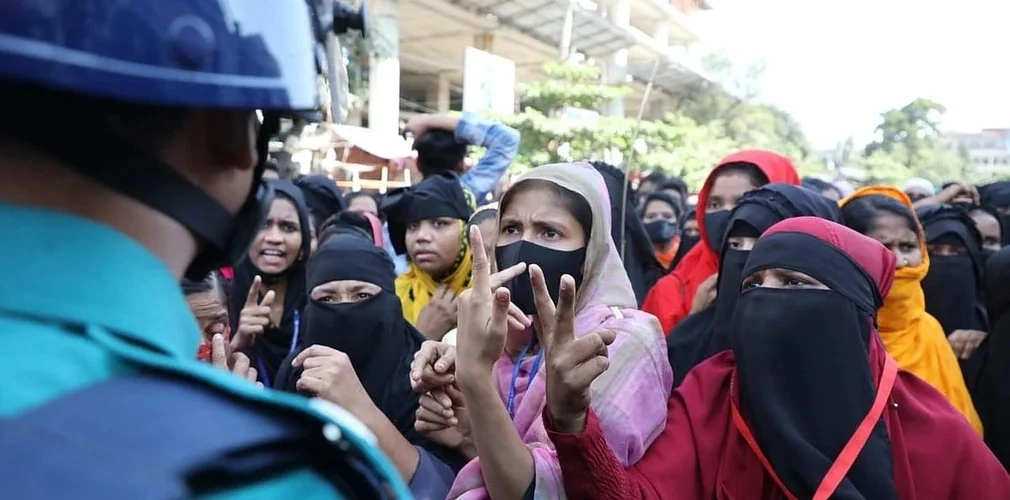
Amid the mass protests of garment workers and the closing down of several units, questions arise about who has the authority to speak for them
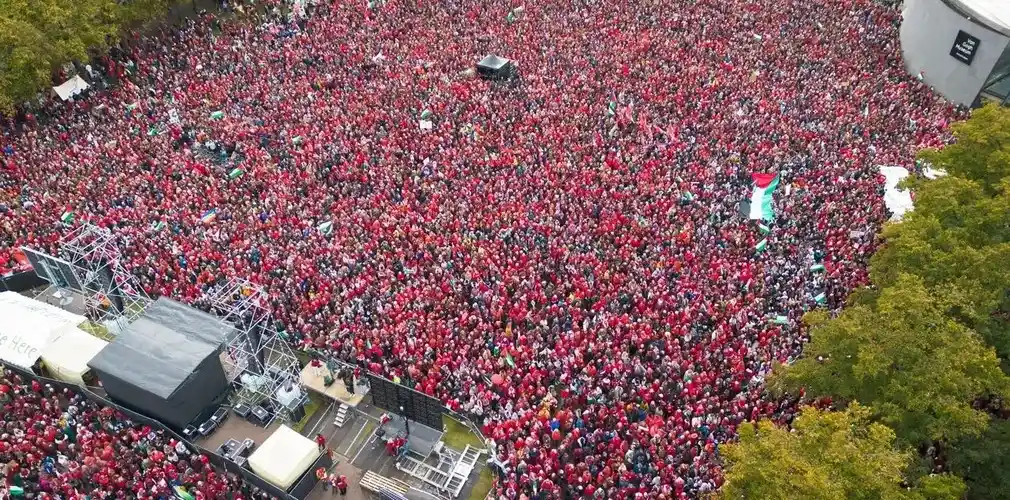
Bangladesh’s garment industry is celebrated as one of the country’s greatest economic success stories. Its exports reach markets across the world, its factories supply major international fashion brands, and its contribution to national economic growth is proclaimed with considerable pride. Yet behind this success story lies a troubling contradiction: the very people whose labour sustains the industry repeatedly take to the streets to demand even modest wage increases, something to which they are rightfully entitled.
This contradiction, however, is not merely in statistics. Their wages are debated, working conditions examined, rights discussed, and experiences documented. Researchers write about them, policymakers make decisions concerning them, development professionals produce reports, and industry representatives negotiate on their behalf. Yet how often do workers themselves shape the decisions that determine their working lives?
There is an old metaphor: a spoon does not know the taste of soup. It may be immersed in it, stir it, carry it and serve it, but it can never taste it. Similarly, those who study, regulate, profit from or speak on behalf of garment workers may understand the industry’s economics and the language of labour rights. But proximity to workers’ experiences is not the same as experiencing their realities.
The formation of a new minimum wage board for Bangladesh’s garment sector brings this distinction into sharp focus. The question is not simply who occupies a seat at the negotiating table, but whether those whose labour creates the industry’s wealth possess the collective power to negotiate the terms of their livelihoods.
Representation is not bargaining power
Including worker representatives on a wage board is, in principle, an important element of tripartite participation. Employers, workers and the state must all have a place in discussions about wages. But their presence on the board should not be mistaken for evidence of meaningful bargaining power.
A government-appointed board and an independent, functioning trade union movement are not interchangeable. The former provides a mechanism for determining minimum wages; the latter enables workers to organise, articulate demands, negotiate with employers and hold their representatives accountable. Without the freedom and ability to organise independently and bargain collectively, workers remain dependent on others to carry their demands into decision-making spaces.
This raises uncomfortable questions. How directly are worker representatives accountable to those they represent? How effectively can they communicate the concerns of workers across factories and job categories? Can they challenge employers’ positions without institutional or political pressure? And what happens when decisions made at the negotiating table fall short of workers’ expectations?
These are not questions about individual representatives’ intentions or integrity. They concern the strength of the system itself. Representation becomes meaningful only when those being represented have the means to influence decisions.
Limits of speaking on behalf of workers
Bangladesh’s garment workers are not a homogeneous group with identical experiences or demands. Women constitute a substantial proportion of the workforce, while employees across different factories, production lines and job categories face distinct pressures. Their concerns may overlap, but their experiences are not interchangeable.
Researchers may document wage discrimination, excessive working hours, harassment, unsafe conditions and restrictions on organising. Policymakers may translate these findings into recommendations, while international brands introduce supplier codes of conduct. Such interventions may have value, but none can substitute for workers’ ability to identify their priorities, organise around them and demand change.
This does not mean researchers, journalists, policymakers or human rights organisations have no role to play. Independent research and documentation are essential to exposing abuses and holding powerful actors accountable. But there is a fundamental difference between amplifying workers’ voices and assuming the authority to speak in their place.
The language of labour rights can sometimes become detached from the people it is supposed to protect. Reports are published, commitments announced, compliance procedures introduced and international conferences held. Meanwhile, workers may continue to struggle with inadequate wages, unpaid benefits, job insecurity and the consequences of speaking out.
The problem, therefore, is not a lack of discussion about workers. It is the persistent gap between discussing their rights and enabling them to exercise those rights.
Who benefits from the imbalance?
The imbalance in bargaining power is closely connected to the way the global garment supply chain operates. International fashion brands and retailers benefit from production in countries such as Bangladesh, where manufacturers compete for orders in an intensely price-sensitive market. Pressure to meet demanding deadlines, keep production costs low and accommodate changing orders travels down the supply chain, affecting factories and, ultimately, the workers who make the products.
Factory owners cannot be absolved of their responsibility to pay fair wages, provide safe working conditions and respect workers’ rights. Nor can the government evade its duty to enforce labour laws and protect freedom of association. International brands, too, must confront the consequences of their purchasing practices. A commitment to ethical sourcing means little if the commercial terms imposed on suppliers undermine their ability to meet labour standards.
Discussions about workers’ rights, therefore, cannot be confined to minimum-wage negotiations or factory-level compliance. They must also address how power and value are distributed across the supply chain. Those who benefit from workers’ labour must accept responsibility for the conditions under which it is performed.
From representation to the power to negotiate
Improving workers’ lives requires more than periodic wage revisions. It demands an environment in which workers can form and join independent trade unions without intimidation, retaliation or interference, elect representatives they trust, and negotiate collectively with employers.
Wage-setting must also take account of the actual cost of living rather than treating wages primarily as a production cost to be contained. A minimum wage is not a concession granted by employers or the state. It is a basic entitlement and a matter of economic justice.
The government must ensure that labour laws confer rights workers can exercise in practice, rather than merely offering protections on paper. Employers must recognise that workers’ freedom to organise and bargain collectively is not a threat to the industry. International brands must examine whether their commercial practices support or undermine the labour standards they publicly endorse.
Above all, workers must be recognised as rights-holders and active participants in decisions affecting their lives, not simply as beneficiaries of policies designed by others.
Bangladesh’s garment industry has every reason to take pride in its contribution to the national economy. But its success cannot be measured solely by export earnings, market share or the number of international brands sourcing from its factories. It must also be measured by whether workers can live with dignity, exercise their rights and have a genuine say in their employment conditions.
A spoon does not know the taste of soup. Those who speak about workers’ lives must never mistake proximity to their experiences for ownership of them.
The people whose labour creates the wealth should not merely be represented when decisions are made about their lives. They must have the power to shape those decisions themselves.